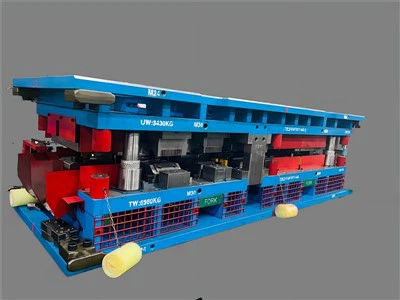
As a seasoned supplier of Transfer Dies, I've witnessed firsthand the pivotal role that the indexing system plays in these complex pieces of machinery. Transfer Dies are integral to the manufacturing process, especially in industries like automotive, where precision and efficiency are non - negotiable. In this blog, I'll delve into the functions of the indexing system in a Transfer Die, highlighting its significance and how it contributes to the overall performance of the die.


Understanding Transfer Dies
Before we jump into the indexing system, let's briefly understand what a Transfer Die is. A Transfer Die is a specialized type of die used in metal stamping operations. It allows for multiple operations, such as punching, blanking, bending, and forming, to be performed on a workpiece as it moves through different stations in the die. This multi - station setup enables high - volume production with a high degree of accuracy. Transfer Dies are commonly used in the automotive industry for manufacturing components like engine parts, body panels, and brackets. To learn more about automotive applications, check out our Automotive Metal Stamping Die page.
The Indexing System: A Key Component
The indexing system in a Transfer Die is responsible for moving the workpiece accurately from one station to the next. It ensures that the workpiece is precisely positioned at each station so that the desired operations can be carried out with the utmost precision. This system is crucial for maintaining the quality and consistency of the stamped parts.
Precision Positioning
One of the primary functions of the indexing system is to position the workpiece accurately at each station. In a Transfer Die, different operations are performed at different stations, and any misalignment can lead to defective parts. The indexing system uses a combination of mechanical, electrical, or hydraulic components to move the workpiece in a controlled manner. For example, it may use precision guides and locators to ensure that the workpiece is aligned correctly. This precision positioning is essential for producing parts with tight tolerances, which is a requirement in industries like automotive and aerospace.
Synchronization with Die Operations
The indexing system must be synchronized with the operations of the die. It needs to move the workpiece at the right time and at the right speed to ensure that the stamping operations are carried out smoothly. For instance, when the punch descends to perform a punching operation, the indexing system must hold the workpiece in place. Once the operation is complete, the indexing system moves the workpiece to the next station. This synchronization is achieved through sophisticated control systems that monitor and adjust the movement of the workpiece based on the position and timing of the die components.
High - Speed Operation
In high - volume production environments, speed is of the essence. The indexing system in a Transfer Die is designed to move the workpiece quickly from one station to the next without sacrificing accuracy. This high - speed operation allows for a large number of parts to be produced in a short period. Advanced indexing systems use high - speed motors and optimized mechanical designs to achieve rapid movement. For example, some systems can move the workpiece at speeds of several meters per second, enabling the production of thousands of parts per hour.
Flexibility and Adaptability
Another important function of the indexing system is its flexibility and adaptability. Different parts may require different indexing patterns or step - sizes. The indexing system should be able to accommodate these variations easily. Modern indexing systems can be programmed to adjust the indexing parameters based on the requirements of the specific part being produced. This flexibility allows manufacturers to use the same Transfer Die for different products, reducing the need for multiple dies and increasing the overall efficiency of the production process.
Types of Indexing Systems
There are several types of indexing systems used in Transfer Dies, each with its own advantages and applications.
Mechanical Indexing Systems
Mechanical indexing systems are the most traditional type. They use gears, cams, and linkages to move the workpiece. These systems are known for their simplicity and reliability. They are suitable for applications where the indexing requirements are relatively straightforward and the production volume is moderate. However, they may have limitations in terms of speed and flexibility compared to other types of indexing systems.
Electrical Indexing Systems
Electrical indexing systems use electric motors and controllers to move the workpiece. They offer greater precision and flexibility compared to mechanical systems. These systems can be easily programmed to adjust the indexing parameters, making them suitable for producing a wide range of parts. Electrical indexing systems are also capable of high - speed operation, which is essential for high - volume production.
Hydraulic Indexing Systems
Hydraulic indexing systems use hydraulic cylinders to move the workpiece. They are known for their high force capabilities, which make them suitable for heavy - duty applications. Hydraulic systems can provide smooth and precise movement, even under high loads. However, they require a hydraulic power unit and may be more complex to maintain compared to mechanical or electrical systems.
Impact on Production Efficiency
The indexing system has a significant impact on the production efficiency of a Transfer Die. A well - designed indexing system can reduce downtime, increase the production rate, and improve the quality of the stamped parts.
Reduced Downtime
By ensuring accurate positioning and synchronization, the indexing system helps to reduce the number of defective parts. This, in turn, reduces the need for rework and downtime associated with fixing defective parts. Additionally, a reliable indexing system is less likely to malfunction, minimizing unplanned downtime due to equipment failure.
Increased Production Rate
As mentioned earlier, the high - speed operation of the indexing system allows for a large number of parts to be produced in a short period. This increased production rate is crucial for meeting the demands of high - volume manufacturing. Moreover, the flexibility of the indexing system enables quick changeovers between different products, further enhancing the overall production efficiency.
Improved Quality
The precision positioning provided by the indexing system ensures that the stamped parts meet the required quality standards. Parts with consistent dimensions and accurate features are less likely to fail during assembly or use. This improved quality can lead to higher customer satisfaction and a better reputation for the manufacturer.
Maintenance and Troubleshooting
To ensure the optimal performance of the indexing system, regular maintenance is essential. This includes lubricating the moving parts, checking the alignment of the guides and locators, and inspecting the electrical or hydraulic components. Troubleshooting the indexing system requires a thorough understanding of its operation and components. Common issues may include misalignment, wear and tear of the mechanical parts, or problems with the control system. By addressing these issues promptly, manufacturers can minimize downtime and maintain the efficiency of the Transfer Die.
Conclusion
In conclusion, the indexing system is a critical component of a Transfer Die. Its functions of precision positioning, synchronization with die operations, high - speed operation, and flexibility are essential for the efficient production of high - quality stamped parts. As a Transfer Die supplier, we understand the importance of a reliable indexing system and offer a range of Transfer Dies with advanced indexing systems to meet the diverse needs of our customers. Whether you are looking for a Progressive casting die or need Progressive Die Manufacturing services, we have the expertise and experience to provide you with the best solutions.
If you are interested in learning more about our Transfer Dies or have specific requirements for your manufacturing process, we encourage you to contact us for a detailed discussion. Our team of experts is ready to assist you in finding the right solution for your needs.
References
- "Metal Stamping Handbook" by Peter Ulintz
- "Automotive Manufacturing Technology" by David Crolla
- Industry research reports on metal stamping and die technology.