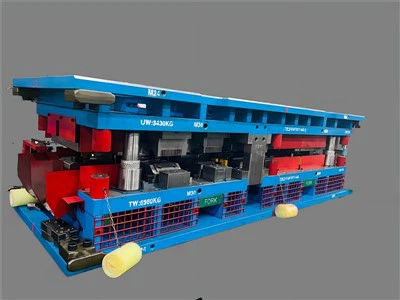
As a seasoned supplier of stamping dies, I've witnessed firsthand the dynamic evolution of this industry. Stamping dies are essential tools in manufacturing, used to shape and cut various materials into specific forms. The development trends of stamping dies are influenced by multiple factors, including technological advancements, market demands, and environmental considerations. In this blog, I'll explore these trends and how they impact our business as a stamping die supplier.
Technological Innovation Driving Precision and Efficiency
One of the most significant trends in stamping die development is the integration of advanced technologies to enhance precision and efficiency. Computer-aided design (CAD) and computer-aided manufacturing (CAM) have revolutionized the way stamping dies are designed and produced. With CAD, engineers can create highly detailed 3D models of dies, allowing for accurate simulations of the stamping process. This helps identify potential issues early in the design phase, reducing the time and cost of prototyping.
CAM systems, on the other hand, automate the manufacturing process, ensuring consistent quality and high productivity. CNC (Computer Numerical Control) machining has become the standard for producing stamping dies, enabling precise cutting and shaping of die components. The use of multi-axis CNC machines further enhances the complexity and accuracy of die manufacturing, allowing for the creation of intricate shapes and features.
Another technological advancement is the application of simulation software. Finite element analysis (FEA) and metal forming simulation tools can predict the behavior of materials during the stamping process, such as stress distribution, deformation, and springback. This information helps optimize die design and process parameters, resulting in higher-quality stamped parts and reduced scrap rates.
Automation and Robotics for Increased Productivity
Automation is playing an increasingly important role in stamping die production and stamping operations. Automated die handling systems can reduce manual labor, improve safety, and increase production efficiency. These systems can load and unload dies, perform maintenance tasks, and even change dies automatically, minimizing downtime between production runs.
Robotics is also being widely adopted in stamping plants. Robots can be used for tasks such as part feeding, transfer, and stacking, improving the speed and accuracy of the stamping process. In particular, transfer die stamping has benefited greatly from robotics. Transfer die stamping involves moving the workpiece through a series of dies to perform multiple operations in a single press stroke. Robotic transfer systems can precisely position the workpiece between dies, ensuring consistent quality and high production rates.
Lightweighting and High-Strength Materials
The demand for lightweight and high-strength materials in industries such as automotive and aerospace is driving the development of stamping dies capable of processing these materials. Lightweight materials, such as aluminum and magnesium alloys, offer significant weight savings, which can improve fuel efficiency and reduce emissions. However, these materials also present challenges in terms of formability and die wear.
To address these challenges, stamping die suppliers are developing new die materials and surface treatments. For example, high-speed steel and carbide are commonly used for die components due to their high hardness and wear resistance. Additionally, advanced surface coatings, such as titanium nitride (TiN) and diamond-like carbon (DLC), can further improve the performance of dies by reducing friction and wear.
In addition to lightweight materials, the use of high-strength steels is also increasing. High-strength steels offer excellent strength-to-weight ratios, making them ideal for structural components. However, they require higher forming forces and can cause more wear on dies. Stamping die suppliers are working on developing dies with optimized geometries and process parameters to handle these materials effectively.
Customization and Flexibility
In today's competitive market, customers are increasingly demanding customized stamping solutions to meet their specific requirements. Stamping die suppliers need to be able to offer a high degree of customization, from die design to production processes. This requires a deep understanding of the customer's needs and the ability to quickly adapt to changing requirements.
Flexibility is also crucial in stamping die production. With the increasing variety of products and shorter product life cycles, stamping plants need to be able to switch between different die setups quickly. Stamping die suppliers are developing modular die systems that can be easily reconfigured and adapted to different production requirements. This reduces the time and cost of die changeovers and increases the overall flexibility of the stamping process.


Sustainability and Green Manufacturing
Sustainability is becoming an important consideration in the stamping die industry. As environmental regulations become more stringent, stamping die suppliers are looking for ways to reduce their environmental impact. This includes using environmentally friendly materials, reducing energy consumption, and minimizing waste generation.
In terms of materials, stamping die suppliers are exploring the use of recycled and bio-based materials. For example, some die components can be made from recycled steel, which reduces the demand for virgin materials and conserves natural resources. Additionally, bio-based lubricants and coolants are being developed to replace traditional petroleum-based products, reducing the environmental impact of the stamping process.
Energy efficiency is another area of focus. Stamping plants are investing in energy-efficient equipment, such as servo presses, which can reduce energy consumption by up to 50% compared to traditional mechanical presses. Additionally, optimizing the stamping process to reduce the number of strokes and the use of idle time can further improve energy efficiency.
Finally, waste reduction is an important aspect of green manufacturing. Stamping die suppliers are implementing lean manufacturing principles to minimize waste generation in the production process. This includes reducing scrap rates, recycling waste materials, and reusing die components whenever possible.
Conclusion
The development trends of stamping dies are driven by technological innovation, market demands, and environmental considerations. As a stamping die supplier, we need to stay ahead of these trends to remain competitive in the market. By investing in advanced technologies, such as CAD/CAM, simulation software, and automation, we can improve the precision and efficiency of our die production. By developing new die materials and surface treatments, we can handle lightweight and high-strength materials effectively. By offering customization and flexibility, we can meet the specific needs of our customers. And by implementing sustainable manufacturing practices, we can reduce our environmental impact and contribute to a greener future.
If you're in the market for high-quality stamping dies, we'd love to hear from you. Our team of experienced engineers and technicians can work with you to develop customized solutions that meet your specific requirements. Contact us today to start a conversation about your stamping die needs.
References
- Smith, J. (2020). Advances in Stamping Die Technology. Journal of Manufacturing Technology, 15(2), 123-135.
- Johnson, A. (2019). The Future of Stamping Die Manufacturing. Manufacturing Review, 22(3), 45-52.
- Brown, C. (2018). Lightweighting and Stamping Die Design. Automotive Engineering Journal, 30(4), 67-74.