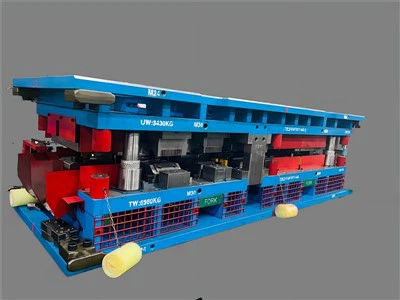
Machining complex-shaped machined parts is a critical aspect of modern manufacturing, and as a machined parts supplier, I've witnessed firsthand the numerous challenges that come with this intricate process. In this blog, I'll delve into the various difficulties we encounter when machining complex-shaped parts, drawing from my experiences in the industry.
1. Design Complexity
One of the primary challenges in machining complex-shaped parts lies in the design phase. Complex geometries often require advanced CAD (Computer-Aided Design) software to accurately model the part. These designs may include intricate curves, undercuts, and non-uniform surfaces, which demand a high level of precision from the CAD designer.
For instance, when dealing with Brass Parts, the design might involve detailed internal structures that need to be precisely defined. Any errors or inaccuracies in the design can lead to significant issues during the machining process. Moreover, the design must also consider the manufacturability of the part. Some complex designs may be theoretically possible but extremely difficult or even impossible to machine using standard manufacturing techniques. This requires close collaboration between the design team and the machining experts to ensure that the design is both functional and feasible to produce.
2. Material Selection and Properties
The choice of material for complex-shaped machined parts is crucial and presents its own set of challenges. Different materials have varying mechanical properties, such as hardness, ductility, and thermal conductivity, which can greatly affect the machining process.
For example, when machining Aluminum Machining Component, aluminum is known for its relatively low density and good machinability. However, it can also be prone to built-up edge formation during machining, which can affect the surface finish of the part. On the other hand, materials like titanium are highly strong and corrosion-resistant but are extremely difficult to machine due to their high strength and low thermal conductivity. This can lead to excessive tool wear and heat generation during machining, increasing the cost and time required to produce the part.
In addition, the material's internal structure and composition can also impact the machining process. For instance, materials with inclusions or variations in hardness can cause uneven tool wear and affect the dimensional accuracy of the part. As a supplier, we need to carefully select the appropriate material based on the part's requirements and ensure that we have the necessary machining techniques and tools to handle it.
3. Tooling and Machining Strategies
Machining complex-shaped parts often requires specialized tooling and machining strategies. Standard cutting tools may not be suitable for the intricate geometries involved, and custom tools may need to be designed and manufactured. These custom tools can be expensive and time-consuming to produce, adding to the overall cost of the machining process.
For example, when machining Turned Parts with complex profiles, we may need to use multi-axis turning machines and specialized cutting inserts. These machines and tools allow us to achieve the required precision and surface finish, but they also require skilled operators and advanced programming techniques.
Moreover, the machining strategy needs to be carefully planned to minimize tool wear, reduce machining time, and ensure the dimensional accuracy of the part. This may involve using high-speed machining techniques, adaptive machining strategies, or a combination of different machining operations. However, implementing these strategies requires a deep understanding of the material, the tooling, and the machining process, as well as access to advanced machining equipment and software.
4. Precision and Tolerance Requirements
Complex-shaped machined parts typically have strict precision and tolerance requirements. Achieving these requirements can be extremely challenging, especially when dealing with intricate geometries and small features.


Even small deviations from the specified dimensions can affect the functionality and performance of the part. For example, in aerospace applications, where parts need to fit together precisely, a slight dimensional error can lead to significant safety issues. To meet these high precision and tolerance requirements, we need to use advanced metrology equipment, such as coordinate measuring machines (CMMs), to verify the dimensions of the part during and after the machining process.
However, measuring complex-shaped parts can also be difficult due to their irregular geometries. Special fixtures and measurement techniques may need to be developed to ensure accurate measurements. Additionally, the machining process itself needs to be carefully controlled to minimize errors and ensure that the part meets the required specifications.
5. Surface Finish and Quality Control
The surface finish of complex-shaped machined parts is another important aspect that presents challenges. A good surface finish is not only important for the aesthetic appearance of the part but also for its functionality. For example, in parts that require a low coefficient of friction, a smooth surface finish is essential.
However, achieving a high-quality surface finish on complex-shaped parts can be difficult due to the irregular geometries and the potential for tool marks and burrs. Special finishing operations, such as grinding, polishing, or electrochemical machining, may be required to improve the surface finish. These operations can be time-consuming and expensive, and they also require careful control to avoid damaging the part.
Quality control is also a critical challenge in machining complex-shaped parts. With the high precision and tolerance requirements, it's essential to have a comprehensive quality control system in place to ensure that every part meets the specified standards. This may involve in-process inspections, final inspections, and statistical process control techniques. However, implementing these quality control measures can be complex and resource-intensive, especially when dealing with a large volume of parts.
6. Cost and Time Constraints
Machining complex-shaped parts is often more expensive and time-consuming compared to machining simple parts. The high cost is due to several factors, including the need for specialized tooling, custom materials, and advanced machining equipment. Additionally, the longer machining times required for complex parts can also increase the cost.
Time constraints are also a significant challenge, especially in industries where fast turnaround times are required. Customers often expect quick delivery of their parts, but machining complex-shaped parts can take a long time, especially if there are any issues during the machining process. As a supplier, we need to balance the cost and time requirements while still ensuring the quality of the parts. This may involve optimizing the machining process, using lean manufacturing principles, and improving our production planning and scheduling.
Conclusion
In conclusion, machining complex-shaped machined parts is a challenging but rewarding process. As a machined parts supplier, we face numerous challenges in the design, material selection, tooling, precision, surface finish, and cost and time management. However, by leveraging advanced technologies, skilled personnel, and effective quality control systems, we can overcome these challenges and produce high-quality complex-shaped parts that meet the needs of our customers.
If you're in need of machined parts, whether they're Brass Parts, Aluminum Machining Component, or Turned Parts, we'd be more than happy to discuss your requirements and provide you with a solution. Contact us to start a procurement discussion and let us help you bring your projects to life.
References
- Kalpakjian, S., & Schmid, S. R. (2010). Manufacturing Engineering and Technology. Pearson Prentice Hall.
- Dornfeld, D. A., Min, S., & Takeuchi, Y. (2007). Handbook of Machining with Cutting Tools. CRC Press.
- Groover, M. P. (2010). Fundamentals of Modern Manufacturing: Materials, Processes, and Systems. Wiley.