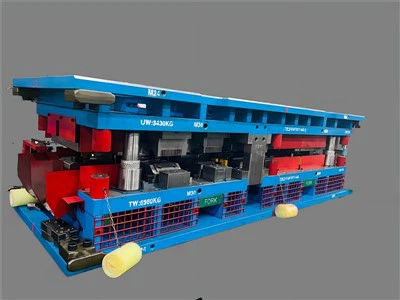
Venting requirements for a prototype die are crucial aspects that can significantly impact the quality and performance of the die and the final products it produces. As a supplier of Prototype Die, I have witnessed firsthand the importance of proper venting in the stamping and manufacturing processes. In this blog, I will delve into the key venting requirements for a prototype die, explain why they matter, and discuss how to ensure that these requirements are met.
Understanding the Basics of Prototype Die Venting
Before we dive into the specific requirements, let's first understand what venting in a prototype die means. Venting refers to the process of allowing air, gases, and other fluids to escape from the die cavity during the stamping or forming process. When a metal sheet is pressed into the die, air is trapped inside the cavity. If this air is not properly vented, it can cause a range of problems, including poor part quality, increased wear and tear on the die, and even damage to the equipment.
Why Venting is Essential for Prototype Dies
-
Improving Part Quality
Proper venting ensures that the metal sheet can fully conform to the shape of the die cavity. Without adequate venting, the trapped air can create air pockets or voids in the stamped part, leading to surface defects, dimensional inaccuracies, and reduced strength. By allowing the air to escape, the metal can flow smoothly into all areas of the die, resulting in high - quality parts with precise dimensions and a smooth surface finish. -
Reducing Die Wear
When air is trapped in the die cavity, it can create additional pressure during the stamping process. This increased pressure can cause excessive wear on the die surfaces, leading to premature die failure. Venting helps to relieve this pressure, reducing the stress on the die and extending its service life. This is particularly important for prototype dies, as they are often used to test new designs and processes, and any die failure can be costly and time - consuming. -
Preventing Equipment Damage
In some cases, the pressure build - up due to poor venting can be so severe that it can cause damage to the stamping equipment. Excessive pressure can lead to overloading of the press, which can result in mechanical failures, such as broken gears or damaged hydraulic systems. By ensuring proper venting, we can prevent these issues and keep the stamping equipment running smoothly.

Venting Requirements for Prototype Dies
-
Venting Location
The location of the vents in a prototype die is critical. Vents should be placed in areas where air is most likely to be trapped. These areas typically include deep pockets, corners, and areas with complex geometries. For example, in a Progressive Tool Sheet Metal die, vents should be strategically placed at each station to ensure that air can escape as the metal progresses through the die. In a Furniture Hardware Stamping Die, vents should be located around the areas where the hardware components are formed, such as the edges of brackets or the holes for screws. -
Venting Size and Shape
The size and shape of the vents also play an important role in their effectiveness. The vents should be large enough to allow the air to escape quickly but small enough to prevent the metal from flowing into them. The size of the vents depends on several factors, including the type of metal being stamped, the thickness of the metal sheet, and the complexity of the die design. In general, vents with a diameter of 0.5 - 2 mm are commonly used for most prototype dies.
The shape of the vents can also vary. Round vents are the most common, as they are easy to machine and provide a uniform flow of air. However, in some cases, rectangular or slot - shaped vents may be more suitable, especially for areas with long, narrow cavities.
- Venting Quantity
The number of vents required for a prototype die depends on the size and complexity of the die cavity. Larger and more complex die cavities will typically require more vents to ensure that all the air can escape. As a general rule, vents should be spaced evenly around the die cavity, with a spacing of 20 - 50 mm depending on the specific application.
Ensuring Proper Venting in Prototype Dies
-
Die Design and Simulation
During the die design phase, it is essential to consider the venting requirements. Computer - aided design (CAD) and simulation software can be used to model the stamping process and analyze the air flow in the die cavity. This allows us to optimize the venting locations, sizes, and quantities before the die is manufactured. By simulating the process, we can identify potential air - trapping areas and make the necessary adjustments to the die design. -
Manufacturing Precision
Once the die design is finalized, the vents must be manufactured with high precision. The vents should be drilled or machined to the correct size and shape, and their surfaces should be smooth to ensure a free flow of air. Any burrs or rough edges in the vents can restrict the air flow and reduce the effectiveness of the venting system. -
Testing and Validation
After the prototype die is manufactured, it is important to test it to ensure that the venting system is working properly. This can be done by conducting stamping tests with the prototype die and inspecting the stamped parts for any signs of air - trapping or other venting - related issues. If any problems are detected, adjustments can be made to the venting system, such as enlarging the vents or adding additional vents.
Conclusion
In conclusion, proper venting is essential for the success of prototype dies. It plays a vital role in improving part quality, reducing die wear, and preventing equipment damage. By understanding the venting requirements, including the location, size, shape, and quantity of vents, and by taking the necessary steps to ensure proper venting during the die design, manufacturing, and testing phases, we can produce high - quality prototype dies that meet the needs of our customers.
If you are in the market for a prototype die or have any questions about venting requirements, we are here to help. Our team of experts has extensive experience in designing and manufacturing prototype dies with optimal venting systems. We can work with you to understand your specific requirements and provide you with a customized solution. Contact us to discuss your project and explore how our Prototype Die can meet your needs.
References
- "Metal Stamping Handbook" by Society of Manufacturing Engineers
- "Die Design and Manufacturing" by various industry experts in die - making