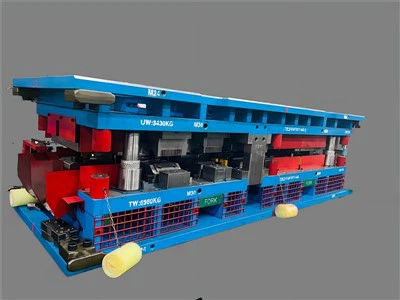
As a supplier of washer stamping dies, understanding the stress distribution characteristics in these dies is crucial for ensuring high - quality production, optimizing die design, and extending die life. In this blog, I will delve into the key aspects of stress distribution in washer stamping dies, sharing insights based on our years of experience in the industry.
1. Basics of Washer Stamping Dies
Washer stamping dies are essential tools in the manufacturing process of washers. They are used to cut, shape, and form washers from metal sheets with high precision and efficiency. The stamping process involves applying a large force to the die, which causes complex stress distributions within the die components.
The main components of a washer stamping die typically include the punch, die block, stripper plate, and guide pins. Each component plays a specific role in the stamping process and is subjected to different types of stresses. For example, the punch is responsible for piercing or forming the washer, and it experiences high compressive and shear stresses during the stamping operation. The die block provides a support surface for the metal sheet and the punch, and it also endures significant pressure.
2. Factors Affecting Stress Distribution
Material Properties
The material of the die has a profound impact on stress distribution. High - strength tool steels are commonly used for washer stamping dies due to their excellent hardness, wear resistance, and toughness. However, different grades of tool steel have different mechanical properties, such as yield strength, ultimate tensile strength, and modulus of elasticity. These properties determine how the die material responds to the applied loads. For instance, a die made of a steel with a higher yield strength can withstand greater stresses before plastic deformation occurs.
Die Geometry
The shape and dimensions of the die components also influence stress distribution. Sharp corners and edges in the die design can cause stress concentrations. When the stamping force is applied, the stress at these sharp points can be significantly higher than the average stress in the surrounding areas. This can lead to premature failure of the die, such as cracking or chipping. On the other hand, well - rounded corners and smooth transitions in the die geometry can help to distribute the stress more evenly.
The clearance between the punch and the die block is another important geometric factor. An appropriate clearance ensures smooth stamping and uniform stress distribution. If the clearance is too small, the punch may experience excessive friction and wear, and the stress on the die components may increase. Conversely, if the clearance is too large, the quality of the stamped washers may be compromised, and the die may also be subjected to uneven stresses.
Stamping Process Parameters
The stamping speed, force, and the number of strokes per minute are key process parameters that affect stress distribution. A higher stamping speed can generate dynamic stresses in the die, which are different from the static stresses at lower speeds. The stamping force, which is determined by the material thickness, hardness, and the size of the washer, directly affects the magnitude of the stress in the die. Excessive stamping force can cause overloading of the die components and increase the risk of failure.
3. Types of Stresses in Washer Stamping Dies
Compressive Stress
Compressive stress is one of the most common types of stresses in washer stamping dies. The punch exerts a compressive force on the metal sheet during the stamping process, and the die block and other components also experience compressive stresses to support the load. Compressive stress can cause the die material to deform plastically if it exceeds the yield strength of the material. In extreme cases, it can lead to the crushing of the die components.
Shear Stress
Shear stress occurs when two adjacent parts of the die material slide relative to each other. During the cutting or forming process, the punch and the die block create a shearing action on the metal sheet. This shearing action also generates shear stresses in the die components. High shear stresses can cause the die material to fail in shear, resulting in the formation of cracks or the separation of layers in the die.
Bending Stress
Bending stress may occur in the die components, especially in the punch and the stripper plate. When the punch is not perfectly aligned or when there is an uneven distribution of the stamping force, the punch may be subjected to bending moments. These bending moments create bending stresses, which can lead to the deflection or breakage of the punch.
4. Analyzing Stress Distribution
To accurately understand the stress distribution in washer stamping dies, various analysis methods can be employed.
Finite Element Analysis (FEA)
Finite Element Analysis is a powerful numerical method for analyzing stress distribution in complex structures. By dividing the die into a large number of small elements, FEA can simulate the behavior of the die under different loading conditions. It can provide detailed information about the stress distribution, including the location and magnitude of the maximum stresses. This information is invaluable for optimizing the die design and predicting potential failure points.
Experimental Testing
Experimental testing, such as strain gauge measurement, can also be used to measure the actual stress in the die during the stamping process. Strain gauges are attached to the surface of the die components, and they can measure the strain, which is then converted to stress using the material's mechanical properties. Experimental testing can validate the results obtained from FEA and provide real - world data for further analysis.
5. Implications for Die Design and Manufacturing
Understanding the stress distribution characteristics in washer stamping dies has significant implications for die design and manufacturing.
Design Optimization
Based on the analysis of stress distribution, the die design can be optimized to reduce stress concentrations and improve the overall performance of the die. This may involve modifying the die geometry, selecting the appropriate material, and adjusting the process parameters. For example, adding fillets to sharp corners, increasing the thickness of the die components in high - stress areas, or using a more suitable tool steel can all help to enhance the die's durability.
Quality Control
During the manufacturing process, strict quality control measures should be implemented to ensure that the die meets the design requirements. This includes accurate machining of the die components, proper heat treatment to achieve the desired material properties, and precise assembly of the die. Any deviation from the design specifications can affect the stress distribution and lead to premature die failure.
6. Our Company's Experience and Solutions
As a washer stamping die supplier, we have extensive experience in dealing with stress distribution issues. We use advanced FEA software to analyze the stress distribution in our dies during the design stage. This allows us to identify potential problems early and make necessary adjustments to the design.
We also pay close attention to the material selection and manufacturing process. We source high - quality tool steels from reliable suppliers and ensure that the heat treatment process is carried out precisely to achieve the optimal material properties. Our manufacturing team has rich experience in machining and assembling the dies, ensuring that the dimensional accuracy and surface finish meet the highest standards.
In addition, we offer a range of stamping die products, including Progressive Die Metal Stamping, Gas Stove Die, and Progressive Die Tooling. These products are designed with a focus on stress distribution optimization, ensuring long - term reliability and high - quality production.
7. Conclusion and Call to Action
In conclusion, understanding the stress distribution characteristics in washer stamping dies is essential for ensuring the efficiency and quality of the stamping process. By considering the factors affecting stress distribution, analyzing the types of stresses, and using appropriate analysis methods, we can optimize the die design and manufacturing process.
If you are in the market for high - quality washer stamping dies or other stamping die products, we invite you to contact us for a detailed discussion. Our team of experts is ready to provide you with customized solutions based on your specific requirements. We look forward to the opportunity to work with you and contribute to the success of your manufacturing operations.

References
- Dieter, G. E. (1988). Mechanical Metallurgy. McGraw - Hill.
- Kalpakjian, S., & Schmid, S. R. (2008). Manufacturing Engineering and Technology. Pearson Prentice Hall.
- Tool and Manufacturing Engineers Handbook, Vol. 3: Forming. Society of Manufacturing Engineers.