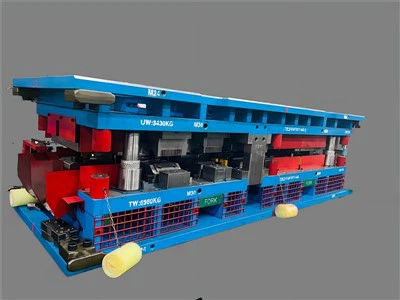
In the world of metal stamping, transfer dies play a crucial role in mass - producing high - quality metal parts efficiently. As a dedicated transfer die supplier, I understand the importance of safety in the operation of these complex tools. Transfer dies are used to transfer workpieces from one station to another in a stamping press, performing multiple operations on a single piece of metal. However, due to their high - speed and multi - stage nature, they also pose significant safety risks. In this blog, I will discuss the essential safety devices needed for a transfer die to ensure a safe working environment.
1. Emergency Stop Devices
One of the most fundamental safety features for any industrial machinery, including transfer dies, is the emergency stop device. These devices are designed to immediately halt the operation of the transfer die in case of an emergency. Emergency stop buttons are typically large, brightly colored, and easily accessible from multiple locations around the stamping press. When pressed, they cut off the power supply to the die and the press, preventing any further movement and potential harm to operators or damage to the equipment.
In addition to the standard emergency stop buttons, some modern transfer dies are equipped with rope - pull emergency stops. These are long ropes that run along the length of the press, allowing operators to quickly stop the machine from any point along its side. This is particularly useful in large - scale stamping operations where the operator may not always be close to a traditional emergency stop button.
2. Light Curtains
Light curtains are another vital safety device for transfer dies. They consist of a series of infrared light beams that create an invisible barrier in front of the die area. When an object, such as an operator's hand, breaks the light beam, the light curtain sends a signal to the press control system, which immediately stops the machine.


Light curtains are highly effective in preventing accidental entry into the dangerous die area during operation. They are adjustable in height and width, allowing them to be customized to fit the specific dimensions of the transfer die. Moreover, modern light curtains are equipped with advanced features such as self - diagnostic capabilities, which can detect and report any malfunctions or blockages in the light beams.
3. Two - Hand Control Devices
Two - hand control devices are designed to ensure that both of the operator's hands are safely away from the die area during the stamping process. When using a two - hand control, the operator must press two separate buttons simultaneously to initiate the stamping operation. These buttons are typically located at a safe distance from the die, forcing the operator to keep their hands clear of the danger zone.
The two - hand control system is interlocked with the press control, so if one hand is removed from the button before the stamping cycle is complete, the machine will stop immediately. This helps to prevent injuries caused by operators trying to reach into the die while it is in motion.
4. Die Protection Sensors
Die protection sensors are essential for monitoring the condition of the transfer die during operation. These sensors can detect various issues such as misfeeds, broken punches, or improper die alignment. For example, a misfeed sensor can detect if the workpiece is not properly positioned in the die, and if so, it will stop the press before any damage occurs.
Broken punch sensors use techniques such as vibration monitoring or electrical conductivity to detect if a punch has broken during the stamping process. If a broken punch is detected, the sensor will send a signal to the press control system, which will stop the machine and alert the operator. This not only protects the die from further damage but also prevents the production of defective parts.
5. Safety Mats
Safety mats are placed on the floor around the stamping press. They are pressure - sensitive devices that detect when an operator steps on them. When a person steps on a safety mat, it sends a signal to the press control system, which stops the machine.
Safety mats are particularly useful in areas where the operator may need to approach the die for maintenance or adjustment. They provide an additional layer of protection by ensuring that the machine stops if an operator accidentally enters the danger zone.
6. Overload Protection Devices
Transfer dies are subject to high forces during the stamping process. Overload protection devices are used to prevent damage to the die and the press in case of an excessive load. These devices can be mechanical, hydraulic, or electronic.
Mechanical overload protection devices typically use springs or other mechanical components to limit the force applied to the die. If the force exceeds a certain threshold, the mechanical device will release, preventing further damage. Hydraulic overload protection systems use hydraulic fluid to absorb excess force, while electronic overload protection devices use sensors to monitor the load and stop the press if it exceeds the safe limit.
7. Guarding Systems
Guarding systems are physical barriers that enclose the transfer die and the stamping press. They are designed to prevent operators from accessing the dangerous areas of the machine during operation. Guarding systems can be made of metal, plastic, or other materials, and they come in various forms, such as fixed guards, interlocked guards, and movable guards.
Fixed guards are permanently attached to the press and cannot be removed without the use of tools. Interlocked guards are connected to the press control system, and the machine will not operate if the guard is open. Movable guards can be opened or closed as needed, but they are also interlocked to ensure safety.
Importance of Safety Devices in Transfer Dies
The use of safety devices in transfer dies is not only a legal requirement in many countries but also a moral obligation for any responsible manufacturer. By investing in high - quality safety devices, companies can significantly reduce the risk of workplace accidents, which can lead to serious injuries or even fatalities.
Moreover, safety devices can also improve the efficiency and productivity of the stamping process. When operators feel safe, they are more likely to focus on their work, leading to fewer errors and higher - quality products. Additionally, the use of safety devices can help to reduce downtime caused by equipment damage and maintenance, as they can prevent many common problems before they occur.
As a transfer die supplier, we are committed to providing our customers with the highest level of safety in our products. We offer a wide range of transfer dies that are equipped with the latest safety devices, ensuring that our customers can operate their stamping presses with confidence.
If you are in the market for transfer dies, Sheet Metal Progressive Tool, Sheet Metal Stamping Dies, or Automotive Stamping Dies, we invite you to contact us for a detailed discussion about your specific requirements. Our team of experts is ready to assist you in choosing the right transfer die and safety devices for your application.
References
- Stamping Press Safety Handbook, American National Standards Institute (ANSI)
- OSHA Guidelines for Metal Stamping Operations
- Technical Manuals of Leading Transfer Die Manufacturers