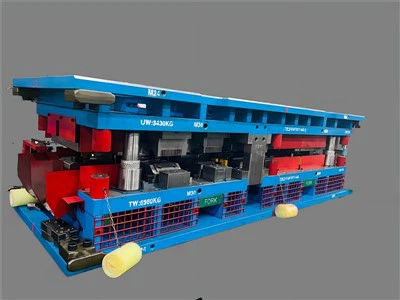
Hey there! As a supplier of prototype dies, I've been in the industry long enough to know that flatness is a big deal when it comes to these tools. In this blog, I'm gonna share with you what the requirements for the flatness of a prototype die are and why they matter so much.
First off, let's talk about why flatness is important in a prototype die. A prototype die is used to create samples or small - scale production parts. If the die isn't flat, it can lead to a whole bunch of problems. For example, uneven pressure distribution during the stamping or forming process. This uneven pressure can cause the parts to have inconsistent dimensions, poor surface finish, or even cracks. And in the end, that means you're not getting a high - quality prototype, which can delay product development and increase costs.
So, what are the actual requirements for the flatness of a prototype die? Well, it depends on a few factors.
1. Part Design and Tolerances
The design of the part you're trying to create plays a huge role in determining the flatness requirements of the die. If the part has tight dimensional tolerances, say within a few thousandths of an inch, then the die needs to be extremely flat. For instance, if you're making Furniture Hardware Stamping Die, which often require precise fits and smooth surfaces, the flatness of the die is crucial. A small deviation in the die's flatness can lead to misaligned or poorly - fitting furniture hardware parts.
On the other hand, if the part has looser tolerances, the flatness requirements for the die can be a bit more forgiving. But even then, you still need to maintain a certain level of flatness to ensure the overall quality of the part.
2. Material of the Die
The material used to make the prototype die also affects the flatness requirements. Different materials have different properties, such as hardness, thermal expansion, and elasticity. For example, if you're using a hard - tool steel for your die, it can withstand high pressures during the stamping process. However, hard - tool steels can also be more prone to warping if they're not heat - treated properly. So, you need to ensure that the die is flat within the acceptable range to avoid any issues during use.
Some materials may expand or contract with temperature changes. If the die is used in an environment where the temperature fluctuates, you need to account for this in the flatness requirements. A die made of a material with a high coefficient of thermal expansion may need to have a more conservative flatness specification to prevent it from going out of tolerance as the temperature changes.
3. Stamping or Forming Process
The type of stamping or forming process you're using is another important factor. In a simple blanking process, where you're just cutting a shape out of a sheet of metal, the flatness requirements might not be as strict as in a deep - drawing or bending process.


For High Precision Stamping Die, which are often used in applications like electronics or medical devices, the flatness of the die is extremely critical. These processes require a high level of precision to create parts with the right dimensions and surface finish. Any deviation in the die's flatness can lead to parts that don't meet the required specifications.
In a bending process, if the die isn't flat, the bend angle and radius of the part can be affected. This can result in parts that don't fit together properly or that have structural weaknesses.
Measuring and Ensuring Flatness
To meet the flatness requirements, you need to have a way to measure the flatness of the prototype die accurately. There are several methods for measuring flatness, including using a surface plate and a dial indicator. A surface plate is a flat reference surface, and a dial indicator can be used to measure the height variations across the surface of the die.
Another method is using a coordinate measuring machine (CMM). A CMM can provide highly accurate measurements of the die's surface, allowing you to determine if it meets the flatness requirements.
During the manufacturing process of the prototype die, there are several steps you can take to ensure flatness. First, proper machining techniques are essential. Using high - precision machining tools and techniques can help to create a flat surface on the die. After machining, heat - treatment processes need to be carefully controlled to prevent warping. And finally, any finishing operations, such as grinding or polishing, should be done with the flatness requirements in mind.
Real - World Examples
Let's take a look at some real - world examples to illustrate the importance of flatness in prototype dies. Suppose you're making Punch Riveting Die. These dies are used to create holes and insert rivets into metal parts. If the die isn't flat, the holes may not be punched straight, and the rivets may not be inserted correctly. This can lead to parts that are structurally weak or that don't function as intended.
In the automotive industry, prototype dies are used to create various parts, from engine components to body panels. For body panels, which need to have a smooth and uniform surface, the flatness of the die is crucial. Any deviation in the die's flatness can result in visible imperfections on the body panel, such as waviness or unevenness.
Conclusion
In conclusion, the flatness of a prototype die is a critical factor in ensuring the quality of the parts it produces. The requirements for flatness depend on the part design, the material of the die, and the stamping or forming process. By understanding these factors and using proper measurement and manufacturing techniques, you can ensure that your prototype die meets the necessary flatness requirements.
If you're in the market for high - quality prototype dies that meet strict flatness requirements, we're here to help. Whether you need a Furniture Hardware Stamping Die, a High Precision Stamping Die, or a Punch Riveting Die, we've got the expertise and experience to deliver. Don't hesitate to reach out to us for a consultation and let's start working on your next project together!
References
- "Tool and Die Making Handbook" by Peter J. Ulintz
- "Metal Stamping Technology" by George E. Dieter
- "Manufacturing Engineering and Technology" by Serope Kalpakjian and Steven R. Schmid