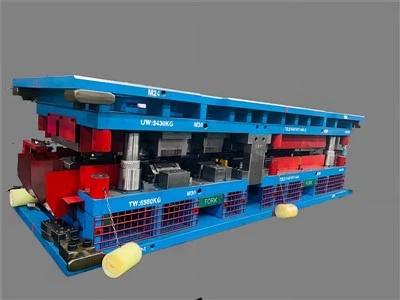
As a supplier of Prototype Die, I understand the importance of clear marking requirements for these crucial tools. In the manufacturing industry, prototype dies play a vital role in the product development process, allowing companies to test and refine their designs before mass production. Proper marking on prototype dies is not only a matter of organization but also a key factor in ensuring efficiency, accuracy, and safety. In this blog post, I will delve into the marking requirements for a prototype die, providing insights based on my experience in the field.
Identification Marking
The first and most fundamental marking requirement for a prototype die is identification. Each die should have a unique identifier that clearly distinguishes it from other dies in the production facility. This identifier can be a combination of letters, numbers, or a specific code assigned by the manufacturer. The identification marking should be prominently placed on the die, preferably on a flat and easily visible surface. This allows operators to quickly and accurately identify the die they need, reducing the risk of using the wrong die and causing production delays or errors.
For example, at our company, we use a standardized naming convention for our Prototype Die. Each die is assigned a unique part number that includes information about the die type, size, and project it is associated with. This part number is engraved on the die using a durable marking method, such as laser engraving or chemical etching, to ensure it remains legible throughout the die's lifespan.
In addition to the unique identifier, the die should also be marked with the name of the manufacturer or supplier. This information is important for traceability and quality control purposes. If there are any issues or questions regarding the die, the manufacturer's name allows the end-user to easily contact the appropriate party for support.
Size and Dimension Marking
Accurate size and dimension markings are essential for prototype dies. These markings provide critical information about the die's physical characteristics, such as its length, width, height, and thickness. They also indicate the size and location of key features, such as cavities, punches, and guide pins.
Size and dimension markings should be clearly visible and precise. They can be marked directly on the die surface using a measuring tool, such as a caliper or micrometer, or they can be provided on a separate drawing or specification sheet. In either case, the markings should be consistent with the design specifications and any relevant industry standards.
For instance, when manufacturing a Prototype Die for a specific product, we ensure that all size and dimension markings are in accordance with the customer's design requirements. We use advanced measuring equipment to verify the accuracy of the markings and make any necessary adjustments before the die is shipped. This attention to detail helps to ensure that the die will produce parts that meet the desired specifications.
Material and Heat Treatment Marking
The material used to manufacture the prototype die and its heat treatment status are important factors that can affect the die's performance and durability. Therefore, it is crucial to mark the die with information about the material and heat treatment.
The material marking should indicate the type of steel or other material used in the die's construction. This information helps operators to understand the die's properties, such as its hardness, strength, and wear resistance. It also allows them to select the appropriate cutting tools and machining parameters when working with the die.
The heat treatment marking should indicate the type of heat treatment applied to the die, such as quenching, tempering, or nitriding. Heat treatment can significantly improve the die's mechanical properties, so it is important to know the specific heat treatment process used. This information can also be useful for troubleshooting and maintenance purposes.
At our company, we mark all our Prototype Die with detailed information about the material and heat treatment. We use a combination of stamping and engraving methods to ensure the markings are permanent and legible. This transparency allows our customers to have full confidence in the quality and performance of our dies.
Safety Marking
Safety is a top priority in any manufacturing environment, and prototype dies are no exception. Therefore, it is important to mark the die with appropriate safety information to ensure the well-being of operators and other personnel.


Safety markings can include warnings about potential hazards, such as sharp edges, moving parts, or high-pressure areas. They can also provide instructions on how to safely operate, maintain, and store the die. These markings should be clearly visible and easy to understand, using standardized symbols and text.
For example, we mark our Prototype Die with safety labels that indicate the location of emergency stop buttons, the proper way to handle the die, and any special precautions that need to be taken. We also provide safety training to our customers to ensure they are aware of the potential hazards associated with using the die and how to mitigate them.
Direction and Orientation Marking
In some cases, prototype dies need to be installed and operated in a specific direction or orientation. To ensure proper installation and functionality, it is important to mark the die with clear direction and orientation indicators.
These indicators can be in the form of arrows, symbols, or text that show the correct way to position the die. They can also indicate the direction of movement for any moving parts, such as slides or cams. By providing these markings, operators can easily align the die correctly, reducing the risk of misalignment and damage to the die or the parts it produces.
When manufacturing a Prototype Die, we carefully consider the direction and orientation requirements of the application. We mark the die with appropriate indicators to ensure it can be installed and operated correctly. This attention to detail helps to ensure the die functions as intended and produces high-quality parts.
Maintenance and Inspection Marking
Regular maintenance and inspection are essential for keeping prototype dies in good working condition. To facilitate these processes, it is useful to mark the die with information about maintenance schedules, inspection points, and any special requirements.
Maintenance markings can include recommended lubrication points, cleaning procedures, and replacement intervals for wear parts. Inspection markings can indicate the locations where critical dimensions should be measured and the frequency of inspections. By providing this information on the die, operators can easily follow the maintenance and inspection procedures, ensuring the die remains in optimal condition.
At our company, we provide detailed maintenance and inspection instructions to our customers along with the Prototype Die. We also mark the die with relevant information to make it easier for operators to perform these tasks. This proactive approach helps to extend the lifespan of the die and reduce the risk of unexpected breakdowns.
Conclusion
In conclusion, proper marking of prototype dies is essential for ensuring efficiency, accuracy, and safety in the manufacturing process. Identification marking, size and dimension marking, material and heat treatment marking, safety marking, direction and orientation marking, and maintenance and inspection marking are all important aspects that need to be considered.
As a Prototype Die supplier, we are committed to providing high-quality dies that meet the strictest marking requirements. We use advanced marking techniques and equipment to ensure the markings are clear, durable, and accurate. By adhering to these marking requirements, we help our customers to streamline their production processes, improve the quality of their products, and reduce costs.
If you are in need of a Prototype Die or have any questions about our marking requirements, please feel free to contact us for procurement and further discussion. We look forward to working with you to meet your specific needs.
References
- ASME Y14.5 - Dimensioning and Tolerancing Standard
- ISO 13399 - Cutting Tools Data Representation and Exchange
- Die Manufacturing Handbook