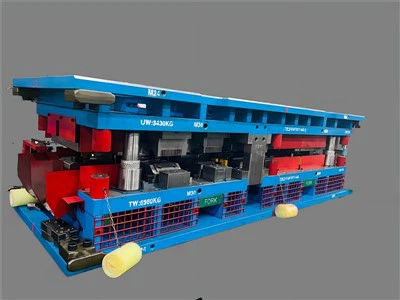
In the realm of manufacturing, single casting dies play a pivotal role in shaping various metal components. As a dedicated single casting die supplier, I've witnessed firsthand the distinct characteristics and requirements when it comes to working with aluminum and copper alloys. This blog post aims to delve into the differences between single casting dies for these two widely used alloys, shedding light on their unique properties, applications, and the considerations involved in die design and production.
Material Properties
Aluminum and copper alloys possess fundamentally different material properties, which have a profound impact on the design and performance of single casting dies.
Aluminum Alloys
Aluminum is renowned for its low density, high strength - to - weight ratio, and excellent corrosion resistance. These properties make it a popular choice in industries such as automotive, aerospace, and consumer electronics. When casting aluminum alloys, the lower melting point (around 660°C) compared to copper alloys is a significant advantage. It reduces the energy required for melting and pouring, and also lessens the thermal stress on the single casting die.
However, aluminum alloys have a relatively high coefficient of thermal expansion. This means that during the casting process, as the molten aluminum cools and solidifies, it undergoes a more significant dimensional change. Die designers need to account for this expansion and contraction to ensure the final cast part meets the required dimensional accuracy.
Copper Alloys
Copper alloys, on the other hand, are valued for their high electrical and thermal conductivity, good mechanical strength, and excellent wear resistance. They are commonly used in electrical components, plumbing fixtures, and high - performance machinery parts. Copper alloys have a much higher melting point than aluminum alloys, typically ranging from 1083°C to 1190°C. This high melting point places greater demands on the single casting die in terms of heat resistance and thermal stability.
Copper alloys also have a lower coefficient of thermal expansion compared to aluminum. While this can simplify some aspects of die design related to dimensional changes during solidification, the high - temperature environment during casting requires the use of more heat - resistant materials for the die.
Die Material Selection
The choice of die material is crucial for the successful casting of both aluminum and copper alloys. Different die materials are selected based on the specific requirements of each alloy.
For Aluminum Alloys
Due to the relatively lower casting temperature of aluminum alloys, die materials with good thermal conductivity and moderate heat resistance can be used. Common die materials for aluminum casting include H13 tool steel. H13 steel has excellent thermal fatigue resistance, which is important as the die is repeatedly heated and cooled during the casting process. It can also withstand the abrasive forces generated by the flowing molten aluminum.
Another option is nickel - based alloys. These alloys offer good corrosion resistance, which is beneficial when casting aluminum alloys that may contain elements that could cause corrosion in the die over time.
For Copper Alloys
Given the high casting temperature of copper alloys, die materials with superior heat resistance are essential. Tungsten - based alloys and some high - nickel alloys are often used. Tungsten has an extremely high melting point and excellent heat - resistant properties. It can withstand the high - temperature environment of copper alloy casting without significant deformation.
In addition, some ceramic materials are also being explored for casting copper alloys. Ceramics have high heat resistance and chemical stability, but they can be brittle and more difficult to machine into complex die shapes.
Die Design Considerations
The design of single casting dies for aluminum and copper alloys varies significantly to accommodate the unique characteristics of each alloy.
Gating and Riser Design
In aluminum alloy casting, gating and riser systems are designed to ensure smooth and even filling of the die cavity while minimizing turbulence. Since aluminum has a relatively low viscosity when molten, the gating system can be designed with smaller cross - sectional areas. The riser is used to supply additional molten metal to compensate for the shrinkage during solidification. Due to the larger thermal expansion of aluminum, the riser size and location need to be carefully calculated to ensure proper feeding.
For copper alloy casting, the gating system needs to be designed to handle the higher - viscosity molten metal. Larger cross - sectional areas are often required to ensure proper flow. The riser design also needs to account for the slower solidification rate of copper alloys. Since copper alloys have a lower thermal expansion, the focus is more on providing sufficient molten metal to fill the voids created during solidification.
Cooling System Design
Cooling is an important aspect of die design for both alloys. In aluminum alloy casting, a well - designed cooling system helps to control the solidification rate and reduce the risk of hot spots. This can improve the surface finish and mechanical properties of the cast part. Cooling channels are typically placed close to the die cavity to efficiently remove heat.
For copper alloy casting, the cooling system is even more critical due to the high casting temperature. The cooling channels need to be designed to remove heat quickly and uniformly to prevent overheating of the die. Special attention is also paid to the material of the cooling channels to ensure they can withstand the high - temperature environment.
Casting Process
The casting processes for aluminum and copper alloys also have some differences when using single casting dies.
Aluminum Alloy Casting
The most common casting process for aluminum alloys is die casting. In die casting, molten aluminum is injected into the single casting die under high pressure. This process allows for the production of complex - shaped parts with high dimensional accuracy and good surface finish. The relatively low melting point of aluminum makes it suitable for high - speed die - casting operations.
Gravity casting is another option for aluminum alloys, especially for larger and less complex parts. In gravity casting, the molten aluminum is poured into the die cavity by gravity, which is a simpler and more cost - effective method in some cases.
Copper Alloy Casting
Copper alloys are often cast using sand casting or investment casting. Sand casting is suitable for large - scale production of copper alloy parts with relatively simple geometries. It is a more flexible process that can accommodate the high - temperature casting requirements of copper alloys.
Investment casting is used for producing high - precision copper alloy parts with complex shapes. This process involves creating a wax pattern, coating it with a ceramic shell, and then melting out the wax before pouring the molten copper alloy into the shell.
Applications and Market Demand
The applications of single casting dies for aluminum and copper alloys are driven by the unique properties of each alloy and the market demand for their respective products.
Aluminum Alloys
The automotive industry is a major consumer of aluminum cast parts. With the increasing demand for lightweight vehicles to improve fuel efficiency, single casting dies for aluminum alloys are used to produce engine blocks, transmission cases, and structural components. The aerospace industry also relies heavily on aluminum castings for their high - strength - to - weight ratio.
In the consumer electronics market, aluminum cast parts are used in the housings of smartphones, laptops, and other devices due to their good heat dissipation properties and aesthetic appeal.
Copper Alloys
The electrical industry is the largest consumer of copper alloy castings. Single casting dies for copper alloys are used to produce electrical connectors, bus bars, and motor components. The plumbing industry also uses copper alloy castings for faucets, valves, and pipe fittings due to their corrosion resistance and durability.


Conclusion
In conclusion, single casting dies for aluminum and copper alloys have significant differences in terms of material properties, die material selection, die design, casting process, and applications. As a single casting die supplier, understanding these differences is essential for providing high - quality dies that meet the specific requirements of each alloy.
Whether you are in the automotive, electrical, or other industries, if you are looking for reliable single casting dies for aluminum or copper alloys, we are here to help. Our team of experienced engineers and technicians can work closely with you to design and manufacture the perfect single casting die for your needs. We also offer a range of related products such as single casting die, Automotive Progressive Die, and Casting Progressive Die. If you are interested in learning more or discussing your casting die requirements, please feel free to reach out and start a procurement discussion.
References
- Campbell, J. (2003). Casting. Butterworth - Heinemann.
- Flemings, M. C. (1974). Solidification Processing. McGraw - Hill.
- Metals Handbook: Casting (Volume 15). ASM International.