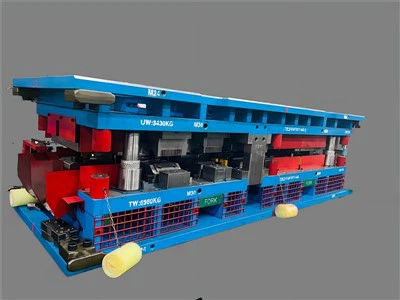
Hey there! As a supplier of stamping dies, I've seen my fair share of stamping die failures over the years. In this blog, I'm gonna talk about the common stamping die failure modes that you might encounter in the industry.
1. Wear Failure
Wear is one of the most common failure modes in stamping dies. When the die is in contact with the workpiece during the stamping process, there's a lot of friction. Over time, this friction causes the surface of the die to wear down.
There are two main types of wear: abrasive wear and adhesive wear. Abrasive wear happens when hard particles on the workpiece or in the environment scratch the die surface. For example, if the metal sheet has some impurities or rough edges, it can act like sandpaper on the die, gradually wearing it away.
Adhesive wear, on the other hand, occurs when the workpiece and the die stick together at the contact points. During the stamping process, these stuck - on parts can be torn off from the die surface, leading to material loss. This is more likely to happen when the stamping speed is high or the lubrication is insufficient.
To deal with wear failure, we can use high - hardness materials for the die, apply surface treatments like nitriding or coating to increase the wear resistance, and make sure to use proper lubricants during the stamping process.
2. Fatigue Failure
Fatigue failure is another biggie in the stamping die world. Every time the die goes through a stamping cycle, it experiences cyclic loading. The repeated stress can cause small cracks to form on the die surface. At first, these cracks are tiny and hard to notice, but as the stamping continues, they grow larger.


There are two stages of fatigue failure: crack initiation and crack propagation. In the crack initiation stage, the stress concentration points on the die, such as sharp corners or areas with surface defects, start to develop micro - cracks. Then, during crack propagation, these micro - cracks grow into larger cracks under the influence of the cyclic stress. Eventually, the crack becomes so large that it causes the die to break.
To prevent fatigue failure, we need to design the die with proper fillet radii to reduce stress concentration. Also, heat treatment can improve the fatigue strength of the die material. Regular inspection of the die to detect early - stage cracks is crucial too.
3. Plastic Deformation
Plastic deformation occurs when the stress applied to the die exceeds its yield strength. In stamping, if the stamping force is too high, the die material can deform permanently. This can change the shape of the die cavity, which means the stamped parts won't meet the required dimensions and quality standards.
There are a few reasons why plastic deformation might happen. One is improper die design. If the die is not thick enough or the structure is not strong enough to withstand the stamping force, it's more likely to deform. Another reason could be using a die material with low yield strength.
To avoid plastic deformation, we need to accurately calculate the stamping force and choose a die material with sufficient yield strength. Proper die design, including the right thickness and reinforcement, is also essential.
4. Fracture
Fracture is the most serious type of die failure. It can be caused by a combination of factors such as excessive stress, fatigue cracks, or material defects. There are two main types of fracture: brittle fracture and ductile fracture.
Brittle fracture usually happens suddenly and without much plastic deformation. It often occurs in materials with low toughness, especially at low temperatures. Ductile fracture, on the other hand, is preceded by significant plastic deformation. The die material stretches and neck - down before finally breaking.
To prevent fracture, we need to select high - quality die materials with good toughness. Also, strict quality control during the die manufacturing process can help eliminate material defects that could lead to fracture.
5. Erosion
Erosion in stamping dies is mainly caused by the high - speed flow of the workpiece material or the lubricant. When the material or lubricant flows at a high speed over the die surface, it can erode the die material. This is more common in processes like transfer die stamping, where the workpiece moves quickly through different stations.
The erosion can cause the die surface to become rough, which affects the surface quality of the stamped parts. To reduce erosion, we can use erosion - resistant coatings on the die surface and optimize the stamping process parameters to control the flow of the workpiece material and lubricant.
6. Corrosion
Corrosion is a problem that can occur when the die is exposed to a corrosive environment. In some stamping processes, the lubricants or the coolant might contain chemicals that can corrode the die material. Also, if the die is stored in a humid environment, it can develop rust.
Corrosion not only weakens the die material but also affects the surface finish of the die. This can lead to poor - quality stamped parts. To prevent corrosion, we can apply anti - corrosion coatings on the die, and make sure to store the die in a dry and clean environment.
How We Can Help
As a stamping die supplier, we have a lot of experience in dealing with these common failure modes. We use high - quality materials and advanced manufacturing processes to ensure the durability of our dies. Our team of experts can design the dies to minimize the risk of wear, fatigue, plastic deformation, and other failures.
If you're in the market for stamping dies, whether it's for transfer die stamping or other applications, we'd love to have a chat with you. We can provide you with customized solutions based on your specific requirements. Don't hesitate to reach out to us for a consultation and let's work together to get the best stamping dies for your business.
References
- Dieter, G. E. (1986). Mechanical Metallurgy. McGraw - Hill.
- Kalpakjian, S., & Schmid, S. R. (2008). Manufacturing Engineering and Technology. Pearson.
- Tool and Manufacturing Engineers Handbook (TMEH), 4th ed., Vol. 3, Stamping, Society of Manufacturing Engineers, 1998.