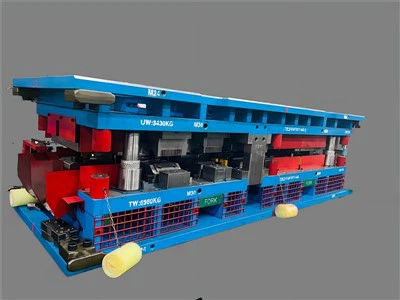
Hey there! As a supplier of Transfer Dies, I've seen firsthand the numerous benefits these tools bring to the table. In this blog, I'm gonna break down the advantages of using a Transfer Die, and why it might be the right choice for your stamping needs.
High Efficiency and Productivity
One of the biggest perks of using a Transfer Die is its ability to boost efficiency and productivity. Unlike traditional single - die stamping processes, where each operation is carried out separately, a Transfer Die combines multiple stamping operations into one seamless process. This means that a workpiece can go through a series of operations like punching, bending, and forming all in one pass through the die.
For example, let's say you're manufacturing automotive parts. With a single die, you'd have to move the part from one machine to another for each step of the stamping process. This not only takes up more time but also increases the risk of misalignment and errors. On the other hand, a Transfer Die can handle all these operations in a continuous flow, reducing the overall production time significantly. You can produce more parts in less time, which is a huge advantage in today's competitive manufacturing landscape.
If you're interested in exploring other types of stamping dies, check out our Custom Stamping Dies page for more options.
Precision and Consistency
Another great advantage of Transfer Dies is the high level of precision and consistency they offer. These dies are designed with extreme accuracy, ensuring that each part produced is identical to the next. The transfer system within the die moves the workpiece from one station to another with pinpoint precision, maintaining the correct alignment throughout the stamping process.
This precision is crucial, especially in industries like automotive and aerospace, where parts need to meet strict quality standards. A single faulty part can lead to major problems in the final product, so having a die that can produce consistent, high - quality parts is essential. With a Transfer Die, you can be confident that every part coming off the production line will meet your specifications.
Cost - Effectiveness
When it comes to cost, Transfer Dies can be a real game - changer. While the initial investment in a Transfer Die may be higher compared to single dies, the long - term savings are significant. As mentioned earlier, the increased efficiency means you can produce more parts in less time, which reduces labor costs. Additionally, the reduced risk of errors and rework also saves money in the long run.
Moreover, Transfer Dies are designed to be durable and long - lasting. They can withstand high - volume production without significant wear and tear, which means you won't have to replace them as often as other types of dies. This further reduces the overall cost of production.
If you want to learn more about Transfer Dies, visit our Transfer Die page for detailed information.
Flexibility
Transfer Dies offer a great deal of flexibility in the stamping process. They can be customized to accommodate different part designs and production requirements. Whether you're working with small, intricate parts or large, complex components, a Transfer Die can be tailored to meet your needs.
The transfer system can be adjusted to move the workpiece at different speeds and in different patterns, allowing for a wide range of stamping operations. This flexibility makes Transfer Dies suitable for a variety of industries, from automotive and electronics to appliances and furniture.
Reduced Material Waste
In the manufacturing process, material waste can be a significant cost factor. Transfer Dies help to minimize material waste by optimizing the stamping process. The precise movement of the workpiece within the die ensures that each part is cut and formed with minimal scrap.
For example, in a progressive stamping process, the die can be designed to nest parts together in a way that maximizes the use of the raw material. This not only saves money on material costs but also has environmental benefits by reducing waste.
If you're also interested in steel sheet stamping, take a look at our Steel sheet progressive die page.
Integration with Automation
In today's era of Industry 4.0, automation is becoming increasingly important in manufacturing. Transfer Dies are well - suited for integration with automated systems. They can be easily incorporated into robotic stamping cells, where robots can load and unload the workpieces, further increasing efficiency and productivity.


Automation also reduces the risk of human error and improves worker safety. With a Transfer Die integrated into an automated system, you can achieve a higher level of precision and consistency in your production process.
Conclusion
So, there you have it - the many advantages of using a Transfer Die. From high efficiency and productivity to precision, cost - effectiveness, flexibility, reduced material waste, and integration with automation, these dies offer a lot to manufacturers.
If you're in the market for a stamping solution that can take your production to the next level, I encourage you to consider a Transfer Die. We're here to help you find the right die for your specific needs. Whether you have questions about the design, installation, or operation of a Transfer Die, our team of experts is ready to assist you.
Don't hesitate to reach out if you're interested in discussing your requirements further. We're always happy to have a chat and see how we can work together to improve your manufacturing process.
References
- Manufacturing Engineering Handbook, McGraw - Hill
- Stamping Technology for the Automotive Industry, Society of Automotive Engineers