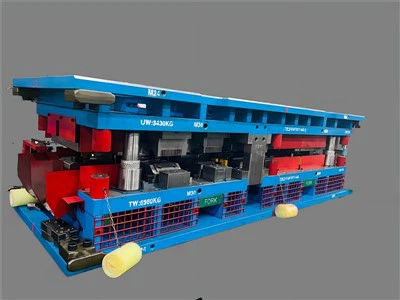
Hey there! As a supplier of washer stamping dies, I've seen firsthand how crucial it is to select the appropriate punch for the job. In this blog post, I'm gonna share some tips and tricks on how to make that decision, so you can get the best results for your stamping projects.
Understanding the Basics of Punches and Washer Stamping Dies
Before we dive into the selection process, let's quickly go over what punches and washer stamping dies are. A punch is a tool that's used to create holes or shapes in a piece of metal. It's typically made of hardened steel and is designed to fit into a die, which is a tool that holds the metal in place and provides the shape for the punch to cut.
Washer stamping dies, on the other hand, are specifically designed to create washers. They're used in a variety of industries, including automotive, aerospace, and electronics, to name a few. These dies can be used to create washers of different sizes, shapes, and materials, depending on the specific requirements of the project.
Factors to Consider When Selecting a Punch
Now that we have a basic understanding of punches and washer stamping dies, let's take a look at some of the factors you should consider when selecting a punch for your project.
Material
The first factor to consider is the material of the punch. Punches can be made from a variety of materials, including high-speed steel (HSS), carbide, and tool steel. Each material has its own unique properties and characteristics, so it's important to choose the one that's best suited for your specific application.
- High-Speed Steel (HSS): HSS punches are a popular choice for general-purpose stamping applications. They're relatively inexpensive and offer good wear resistance and toughness. However, they're not as hard as carbide punches, so they may not be suitable for high-volume production or applications that require a high level of precision.
- Carbide: Carbide punches are made from a combination of tungsten carbide and cobalt. They're extremely hard and wear-resistant, making them ideal for high-volume production and applications that require a high level of precision. However, they're also more expensive than HSS punches and can be more brittle, so they require careful handling and maintenance.
- Tool Steel: Tool steel punches are made from a variety of alloy steels that are specifically designed for use in stamping applications. They offer good wear resistance and toughness, and they're less expensive than carbide punches. However, they're not as hard as carbide punches, so they may not be suitable for high-volume production or applications that require a high level of precision.
Size and Shape
The size and shape of the punch are also important factors to consider. The size of the punch should be based on the size of the hole or shape you need to create, as well as the thickness of the material you're working with. The shape of the punch should be based on the specific requirements of the project, such as the shape of the washer or the type of cut you need to make.
- Round Punches: Round punches are the most common type of punch used in washer stamping applications. They're used to create round holes in the metal, and they come in a variety of sizes and diameters.
- Square Punches: Square punches are used to create square or rectangular holes in the metal. They're typically used in applications where a more precise shape is required, such as in the production of electronic components.
- Specialty Punches: In addition to round and square punches, there are also a variety of specialty punches available, such as oval punches, hexagon punches, and custom-shaped punches. These punches are designed to create specific shapes and sizes, and they're typically used in applications where a standard punch won't work.
Coating
Another factor to consider is the coating of the punch. Coatings can be applied to the surface of the punch to improve its wear resistance, reduce friction, and prevent galling. There are a variety of coatings available, including titanium nitride (TiN), titanium carbonitride (TiCN), and diamond-like carbon (DLC).
- Titanium Nitride (TiN): TiN is a popular coating for punches because it offers good wear resistance and reduces friction. It's also relatively inexpensive and easy to apply.
- Titanium Carbonitride (TiCN): TiCN is a more advanced coating than TiN. It offers better wear resistance and reduces friction even more, making it ideal for high-volume production and applications that require a high level of precision.
- Diamond-Like Carbon (DLC): DLC is a very hard and wear-resistant coating that offers excellent friction reduction. It's typically used in applications where a high level of precision and durability is required, such as in the production of medical devices and aerospace components.
Tolerance
The tolerance of the punch is another important factor to consider. Tolerance refers to the amount of variation that's allowed in the size and shape of the punch. The tolerance of the punch should be based on the specific requirements of the project, such as the level of precision required and the type of material you're working with.
- Standard Tolerance: Standard tolerance punches are typically used in applications where a high level of precision is not required. They offer a relatively wide range of tolerance, which means that the size and shape of the punch may vary slightly from the specified dimensions.
- Precision Tolerance: Precision tolerance punches are used in applications where a high level of precision is required. They offer a very narrow range of tolerance, which means that the size and shape of the punch will be very close to the specified dimensions.
How to Choose the Right Punch for Your Project
Now that we've discussed some of the factors to consider when selecting a punch for your project, let's take a look at how to choose the right punch for your specific application.
Determine Your Requirements
The first step in choosing the right punch for your project is to determine your specific requirements. This includes the size and shape of the hole or shape you need to create, the thickness of the material you're working with, the level of precision required, and the volume of production.
Research Your Options
Once you've determined your requirements, the next step is to research your options. This includes looking at different types of punches, materials, coatings, and tolerances to find the one that's best suited for your specific application. You can also consult with a punch supplier or a stamping die manufacturer to get their recommendations and advice.
Consider Your Budget
Another important factor to consider when choosing the right punch for your project is your budget. Punches can vary in price depending on the material, size, shape, coating, and tolerance, so it's important to choose the one that offers the best value for your money. You may also want to consider the long-term costs of using a particular punch, such as the cost of maintenance and replacement.
Test Your Punch
Before you start using a new punch in production, it's a good idea to test it first. This can help you identify any potential issues or problems with the punch and make any necessary adjustments or modifications before you start producing parts. You can test the punch by running a few sample parts through the stamping die and checking the quality of the holes or shapes that are created.
Conclusion
Selecting the appropriate punch for a washer stamping die is a critical step in ensuring the success of your stamping project. By considering the factors discussed in this blog post, such as the material, size and shape, coating, tolerance, and budget, you can choose the punch that's best suited for your specific application. Remember to research your options, consult with a punch supplier or a stamping die manufacturer, and test your punch before you start using it in production.
If you're in the market for a washer stamping die or a punch, I encourage you to check out our website for more information. We offer a wide range of Progressive Die Metal Stamping solutions, including Microwave Oven Die and Progressive Die Tooling. Our team of experts can help you choose the right punch and die for your specific application and provide you with the support and guidance you need to ensure the success of your project.


If you have any questions or would like to learn more about our products and services, please don't hesitate to contact us. We're always happy to help!
References
- "Stamping Die Design Handbook" by Peter Ulintz
- "Metal Stamping: A Practical Guide" by David A. Koss
- "Punch and Die Design" by Richard B. Markgraf