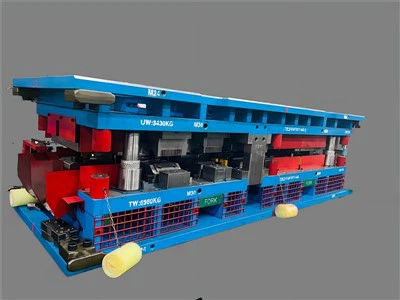
As a stamping die supplier, I've witnessed firsthand the challenges that manufacturers face when it comes to stamping die anti - adhesion performance. Adhesion issues can lead to a host of problems, including poor part quality, increased downtime for die cleaning, and higher production costs. In this blog, I'll share some effective strategies to improve the stamping die's anti - adhesion performance.
Understanding the Causes of Adhesion in Stamping Dies
Before delving into solutions, it's crucial to understand why adhesion occurs in stamping dies. Adhesion is primarily caused by the interaction between the die surface and the workpiece material. During the stamping process, high pressures and temperatures are generated at the die - workpiece interface. These conditions can cause the workpiece material to stick to the die surface, especially if there is a strong chemical affinity between the two materials.
Another factor contributing to adhesion is the presence of contaminants on the die surface or the workpiece. Dust, oil, and other debris can act as a bonding agent, facilitating the adhesion of the workpiece material to the die. Additionally, the surface finish of the die plays a significant role. A rough die surface provides more sites for adhesion to occur compared to a smooth surface.
Surface Treatment Technologies
One of the most effective ways to improve the anti - adhesion performance of stamping dies is through surface treatment. There are several surface treatment technologies available, each with its own advantages.
Nitriding
Nitriding is a thermochemical treatment process that introduces nitrogen into the surface of the die material. This creates a hard, wear - resistant nitride layer on the die surface. The nitride layer not only improves the die's hardness and wear resistance but also reduces its surface energy, making it less likely for the workpiece material to adhere. Nitriding can be carried out using various methods, such as gas nitriding, plasma nitriding, and salt bath nitriding. Gas nitriding is a popular choice due to its ability to provide a uniform nitride layer across the die surface.
Coating Deposition
Coating deposition is another effective surface treatment method. There are different types of coatings that can be applied to stamping dies, including physical vapor deposition (PVD) coatings and chemical vapor deposition (CVD) coatings.


PVD coatings are deposited at relatively low temperatures, which minimizes the risk of distortion to the die. Titanium nitride (TiN), titanium carbonitride (TiCN), and chromium nitride (CrN) are some common PVD coatings used for stamping dies. These coatings offer excellent hardness, wear resistance, and low friction coefficients, which help to reduce adhesion.
CVD coatings, on the other hand, are deposited at higher temperatures. They typically provide a thicker and more wear - resistant coating compared to PVD coatings. However, the high deposition temperature can cause some distortion to the die, so it's important to carefully consider the die material and geometry before choosing CVD coatings.
Lubrication Strategies
Proper lubrication is essential for reducing adhesion in stamping dies. Lubricants act as a barrier between the die surface and the workpiece, reducing friction and preventing direct contact between the two materials.
Selection of Lubricants
When selecting a lubricant for stamping operations, several factors need to be considered. The type of workpiece material, the stamping process (e.g., deep drawing, blanking), and the operating conditions (such as temperature and pressure) all influence the choice of lubricant.
For example, in deep drawing operations, a lubricant with good film - forming properties is required to prevent the workpiece from sticking to the die. Mineral oil - based lubricants are commonly used in stamping operations due to their good lubricity and low cost. However, for more demanding applications, synthetic lubricants may be a better choice. Synthetic lubricants offer superior performance in terms of high - temperature stability, anti - wear properties, and environmental friendliness.
Application of Lubricants
The proper application of lubricants is also crucial. Lubricants can be applied to the die surface or the workpiece using various methods, such as spraying, brushing, or dipping. Spraying is a popular method as it allows for a uniform distribution of the lubricant over a large area. However, it's important to control the spraying parameters, such as the spray pressure and the spray pattern, to ensure that the lubricant is applied evenly.
Die Design Considerations
The design of the stamping die can also have a significant impact on its anti - adhesion performance.
Radius and Clearance
The radius of the die corners and the clearance between the punch and the die are important design parameters. A larger radius at the die corners reduces the stress concentration at the die - workpiece interface, which helps to prevent adhesion. Similarly, an appropriate clearance between the punch and the die ensures that the workpiece can be easily ejected from the die without sticking.
Ventilation
Proper ventilation in the die design is also important. During the stamping process, heat and gases are generated at the die - workpiece interface. If these heat and gases are not properly dissipated, they can increase the temperature and pressure at the interface, leading to adhesion. By incorporating ventilation channels in the die design, the heat and gases can be effectively removed, reducing the risk of adhesion.
Maintenance and Inspection
Regular maintenance and inspection of stamping dies are essential for maintaining their anti - adhesion performance.
Cleaning
After each stamping operation, the die should be cleaned to remove any workpiece material, lubricant residues, and contaminants that may have adhered to the die surface. Cleaning can be carried out using various methods, such as ultrasonic cleaning, abrasive blasting, or chemical cleaning. Ultrasonic cleaning is a gentle and effective method that can remove contaminants from the die surface without damaging it.
Inspection
Regular inspection of the die surface is also important to detect any signs of wear, damage, or adhesion. Visual inspection can be carried out using a magnifying glass or a microscope. Non - destructive testing methods, such as ultrasonic testing and magnetic particle testing, can also be used to detect internal defects in the die.
Conclusion
Improving the stamping die's anti - adhesion performance is a multi - faceted challenge that requires a comprehensive approach. By understanding the causes of adhesion, implementing appropriate surface treatment technologies, using proper lubrication strategies, considering die design factors, and carrying out regular maintenance and inspection, manufacturers can significantly reduce adhesion issues in stamping dies.
If you're looking for high - quality stamping dies with excellent anti - adhesion performance, we're here to help. As a professional stamping die supplier, we have the expertise and experience to provide you with customized solutions that meet your specific requirements. Whether you need a simple blanking die or a complex transfer die stamping die, we can deliver. Contact us today to start a discussion about your stamping die needs and explore how we can work together to improve your production efficiency and part quality.
References
- Kalpakjian, S., & Schmid, S. R. (2008). Manufacturing Engineering and Technology. Pearson Prentice Hall.
- Dieter, G. E. (1988). Mechanical Metallurgy. McGraw - Hill.
- ASM Handbook Committee. (2002). ASM Handbook, Volume 4: Heat Treating. ASM International.