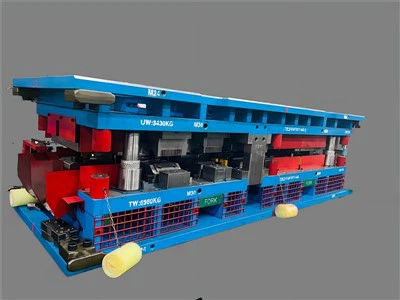
As a single casting die supplier, I've witnessed firsthand the crucial role that impact resistance plays in the performance and longevity of these essential tools. In the highly competitive manufacturing industry, a die's ability to withstand repeated impacts can significantly affect production efficiency, product quality, and overall cost - effectiveness. In this blog, I'll share some practical strategies and insights on how to improve the impact resistance of a single casting die.
Material Selection
The choice of material is the cornerstone of enhancing a single casting die's impact resistance. High - strength alloy steels are often the go - to materials due to their excellent mechanical properties. For example, H13 steel is widely used in die - making because it offers a good balance of hardness, toughness, and heat resistance. Its chromium content helps in forming a protective oxide layer on the surface, which can prevent corrosion and wear during the impact process.
Another option is D2 steel, which has high carbon and chromium content. It provides high wear resistance and good dimensional stability under impact. However, D2 steel is more brittle compared to H13, so it needs to be heat - treated carefully to optimize its impact - resistant properties.
When selecting the material, it's also important to consider the specific requirements of the casting process. For instance, if the die is used in high - temperature applications, materials with better heat - resistant properties should be chosen. You can find more information about different types of dies, such as Automotive Metal Stamping Die, which may have unique material requirements for impact resistance.
Heat Treatment
Heat treatment is a critical process that can significantly improve the impact resistance of a single casting die. Through proper heat treatment, the internal structure of the die material can be optimized, enhancing its strength and toughness.
Quenching and tempering are two common heat - treatment processes. Quenching involves rapidly cooling the heated die material in a quenching medium, such as oil or water. This process hardens the material by forming a martensitic structure. However, quenching alone can make the die too brittle. That's where tempering comes in. Tempering is a subsequent heat - treatment process where the quenched die is heated to a lower temperature and then cooled slowly. This process relieves the internal stresses generated during quenching and improves the die's toughness.
For example, when using H13 steel, a typical heat - treatment process might involve quenching at around 1020 - 1050°C and then tempering at 550 - 650°C for multiple times. This can result in a die with high hardness on the surface and good toughness in the core, which is ideal for withstanding impacts.
Surface Treatment
Surface treatment is another effective way to improve the impact resistance of a single casting die. There are several surface - treatment methods available, each with its own advantages.
One popular method is nitriding. Nitriding involves introducing nitrogen into the surface of the die material, forming a hard nitride layer. This layer can improve the wear resistance, corrosion resistance, and fatigue strength of the die, all of which contribute to better impact resistance. For example, gas nitriding can create a uniform and hard nitride layer on the die surface, which can withstand the high - pressure impacts during the casting process.


Another surface - treatment option is coating. Coatings such as titanium nitride (TiN), titanium carbonitride (TiCN), and diamond - like carbon (DLC) can be applied to the die surface. These coatings can reduce friction, improve wear resistance, and protect the die from corrosion. For instance, a TiN coating can provide a hard and smooth surface, which can reduce the impact force on the die and prevent surface damage. You can explore more about different die types, like Automotive Stamping Dies, and how surface treatments can be applied to enhance their performance.
Design Optimization
The design of a single casting die also has a significant impact on its impact resistance. A well - designed die can distribute the impact force evenly, reducing the stress concentration in specific areas.
One aspect of design optimization is the shape of the die. For example, rounded corners and smooth transitions can help to reduce stress concentration compared to sharp corners. When the die is subjected to an impact, sharp corners can act as stress raisers, leading to crack initiation and propagation. By using rounded corners, the impact force can be more evenly distributed, reducing the risk of failure.
Another important design consideration is the rib and boss structure. Adding ribs to the die can increase its stiffness and strength, allowing it to better withstand impacts. Bosses can be used to provide additional support in critical areas. However, the design of ribs and bosses should be carefully optimized to avoid creating new stress concentration points.
In addition, the size and thickness of the die should be designed according to the specific casting requirements. A die that is too thin may not be able to withstand the impact force, while an overly thick die can increase the cost and may not be necessary for the application.
Maintenance and Inspection
Regular maintenance and inspection are essential for ensuring the long - term impact resistance of a single casting die. By detecting and addressing potential problems early, the die's performance can be maintained, and its lifespan can be extended.
During the maintenance process, the die should be cleaned regularly to remove any debris, rust, or other contaminants. This can prevent corrosion and wear, which can reduce the impact resistance of the die. Lubrication is also important. Applying a suitable lubricant to the die surface can reduce friction and wear during the casting process, which can help to maintain the die's impact - resistant properties.
Inspection should be carried out at regular intervals. Non - destructive testing methods, such as ultrasonic testing and magnetic particle testing, can be used to detect internal cracks and other defects. Visual inspection can also be used to check for surface damage, such as wear marks, cracks, and deformation. If any defects are found, appropriate repair or replacement measures should be taken immediately.
Conclusion
Improving the impact resistance of a single casting die is a multi - faceted process that involves material selection, heat treatment, surface treatment, design optimization, and maintenance. By carefully considering each of these aspects, we can produce dies that are more durable, reliable, and cost - effective.
As a single casting die supplier, I'm committed to providing high - quality dies with excellent impact resistance. If you're in the market for single casting dies or have any questions about improving their impact resistance, I encourage you to contact me for a procurement discussion. I would be more than happy to share my expertise and help you find the best solutions for your specific needs.
References
- ASM Handbook, Volume 4: Heat Treating. ASM International.
- Tool and Die Making Handbook. Industrial Press Inc.
- Surface Engineering for Wear Resistance. Elsevier.