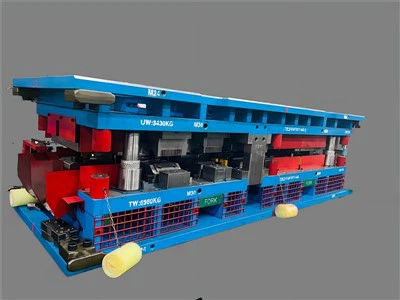
Hey there! As a supplier of single casting dies, I often get asked, "How much does a single casting die cost?" Well, let me tell you, it's not a one - size - fits - all answer. There are a bunch of factors that play into the final price, and I'm gonna break them down for you.
First off, the material used to make the casting die is a huge deal. Different materials have different costs associated with them. For instance, if we're using high - grade steel, it's gonna be more expensive than some lower - quality alloys. High - grade steel is known for its durability and ability to withstand high temperatures and pressures during the casting process. It can handle repeated use without wearing out quickly, which is crucial for long - term production. But because of its superior properties, the raw material itself is pricier. On the other hand, lower - quality alloys might be cheaper upfront, but they may not last as long, which could end up costing more in the long run due to frequent replacements.
The complexity of the design is another major factor. A simple, straightforward casting die with basic shapes and features is going to cost less than a die with intricate details and complex geometries. Think about it like building a house. A small, basic cottage is much easier and cheaper to construct than a large, mansion with lots of unique architectural elements. When it comes to casting dies, complex designs require more time and expertise to create. The machining process is more involved, and there are often more steps in the manufacturing process. For example, if a die needs to have very precise internal channels or detailed surface patterns, it'll take longer on the CNC machines and may require additional finishing work.
The size of the casting die also matters. Larger dies generally cost more than smaller ones. This is because they require more material, and the machining and manufacturing processes take longer. Plus, larger dies might need special handling and transportation arrangements, which add to the overall cost. If a die is too big to fit on a standard transport vehicle, we might have to use specialized equipment or even a custom - made shipping container, all of which come with extra expenses.
Now, let's talk about the production volume. If you're only looking to produce a small number of parts, say a few dozen, the cost per die might be relatively high. This is because the setup costs, such as tooling and programming, are spread over a small number of units. However, if you're planning to produce thousands or even millions of parts, the cost per die can be significantly reduced. The more parts you produce, the more the initial investment in the die gets amortized. It's like buying in bulk at the grocery store. You get a better deal when you buy a large quantity.


Another aspect that affects the cost is the type of casting process. There are different methods like sand casting, die casting, and investment casting, each with its own requirements for the die. Die casting, for example, requires a very high - precision die that can withstand high - pressure injection of molten metal. These dies are usually more expensive to make compared to sand casting dies, which are generally less precise but can be used for larger and less complex parts.
Let's get into some ballpark figures. A simple, small - sized single casting die made from a common alloy for a low - volume production run could cost anywhere from a few hundred dollars to a couple of thousand dollars. On the other hand, a large, complex die made from high - grade steel for high - volume production in a demanding industry like automotive could cost tens of thousands of dollars or even more.
If you're interested in exploring more about different types of dies, you can check out these links. For Sheet Metal Progressive Tool Design, you can visit Sheet Metal Progressive Tool Design. It gives you a good idea of the design principles and applications of this type of tooling. If you're curious about Transfer Dies, head over to Transfer Die. And for Progressive casting dies, take a look at Progressive casting die.
So, as you can see, determining the cost of a single casting die is a complex process. But don't worry, we're here to help you figure it out. We have a team of experts who can work with you to understand your specific needs, whether it's the design, the production volume, or the budget. We'll provide you with a detailed quote and guide you through the entire process.
If you're in the market for a single casting die, whether it's for a small - scale project or a large - scale production, we'd love to hear from you. We can offer you high - quality dies at competitive prices. Just reach out to us, and we can start discussing your requirements. We're committed to providing the best solutions for your casting needs.
In conclusion, the cost of a single casting die varies widely depending on multiple factors. But with our expertise and experience as a supplier, we can help you get the right die at the right price. So, don't hesitate to contact us and start the conversation about your next casting project.
References
- General knowledge of the casting die industry
- Industry reports on casting die manufacturing costs