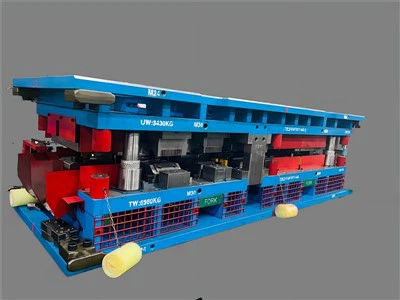
Yo, folks! I'm in the home appliance die business, and I've seen a whole lot of appliances kick the bucket over the years. One thing that really stands out is how the type of usage, whether it's commercial or residential, can have a huge impact on how long an appliance lasts. So, let's dig into this and see how different usage scenarios can make a home appliance bite the dust.
Commercial Usage: The High - Octane Environment
Commercial settings are like the fast - paced race tracks for home appliances. In places like restaurants, hotels, and laundromats, appliances are working non - stop, and the demands placed on them are way higher compared to residential use.
Take a gas stove, for example. In a commercial kitchen, a Gas Stove Die is used to manufacture stoves that are going to be used constantly. Chefs are cooking multiple meals throughout the day, often at high heat levels. The burners are on for long periods, and the stovetop is subjected to a lot of wear and tear. The constant heating and cooling cycles can cause the metal components to expand and contract, leading to cracks and other structural damage over time.
In a laundry mat, commercial washing machines and dryers are running load after load. These machines are built to handle large volumes of clothes, but the constant agitation and spinning put a lot of stress on the internal components. The belts, motors, and drums are all under a lot of pressure. The high - volume usage can cause these parts to wear out much faster than in a residential setting. For instance, the motor might burn out due to overheating from continuous operation, or the drum bearings could wear down, leading to a noisy and eventually non - functional machine.
Another aspect of commercial usage is the quality of maintenance. In a busy commercial establishment, there might not be enough time or resources to perform regular maintenance on appliances. This lack of upkeep can exacerbate the wear and tear. For example, a commercial dishwasher might not have its filters cleaned regularly, which can lead to clogs and reduced performance. Over time, these small issues can build up and cause the appliance to fail.
Residential Usage: The More Relaxed Pace
Residential usage is a whole different ballgame. Appliances in a home are used less frequently and under less extreme conditions. A gas stove in a home kitchen is typically used a few times a day for cooking family meals. The heat levels are usually not as high as in a commercial kitchen, and the cooking sessions are shorter. This means that the components of the stove don't experience the same level of stress as their commercial counterparts.
In a home laundry room, washing machines and dryers are used once or twice a week, depending on the family's needs. The loads are smaller, and the machines have more time to rest between cycles. This gives the internal components a chance to cool down and reduces the overall stress on the machine. For example, the motor in a residential washing machine doesn't have to work as hard to spin a smaller load, so it's less likely to overheat and burn out.
Maintenance in a residential setting is also often more manageable. Homeowners are more likely to notice small issues with their appliances and take the time to address them. They might clean the lint filter in their dryer regularly or call a repair person at the first sign of a problem. This proactive approach to maintenance can extend the lifespan of appliances in a home.
The Role of Die Quality in Appliance Lifespan
As a home appliance die supplier, I know that the quality of the die used to manufacture an appliance plays a big role in its lifespan. Progressive Die Tooling and Tandem Die are two types of dies that are commonly used in the manufacturing of home appliances.
A high - quality die can produce appliance components with precise dimensions and smooth surfaces. This means that the components fit together better and are less likely to experience friction and wear. For example, if a die is used to make the parts of a refrigerator, a well - made die will ensure that the door seals fit tightly, preventing cold air from escaping. This not only improves the energy efficiency of the refrigerator but also reduces the stress on the compressor, which is one of the most important and expensive components of the appliance.
On the other hand, a low - quality die can produce components with rough edges or incorrect dimensions. These components might not fit together properly, leading to increased friction and wear. This can cause the appliance to malfunction or break down earlier than expected.
How Different Usage Affects Die Design
The type of usage also affects the design of the dies used to manufacture appliances. For commercial appliances, the dies need to be designed to produce components that can withstand the high - stress environment. They might be made from stronger materials or have additional features to improve durability. For example, a die used to make a commercial oven door might be designed to produce a thicker and more heat - resistant door panel.
In contrast, dies for residential appliances can be designed with a focus on cost - effectiveness and aesthetics. Since the appliances are used less intensively, the components don't need to be as heavy - duty. However, they still need to be of good quality to ensure a reasonable lifespan.
Signs of an Appliance on the Verge of Dying
Regardless of the usage type, there are some common signs that an appliance is about to give up the ghost. In a gas stove, if you notice uneven heating, strange noises coming from the burners, or a persistent gas smell, these could be signs of a problem. In a washing machine, excessive vibration, leaks, or a failure to spin properly are all red flags.
When these signs start to appear, it's important to take action. In a commercial setting, it might be more cost - effective to replace the appliance rather than repair it, especially if it's an older model. In a residential setting, homeowners might choose to have the appliance repaired, depending on the cost and the age of the appliance.
Conclusion
So, as you can see, the type of usage, whether commercial or residential, has a significant impact on the lifespan of a home appliance. Commercial usage puts appliances under a lot of stress, leading to faster wear and tear and a shorter lifespan. Residential usage, on the other hand, is more relaxed, allowing appliances to last longer.
As a home appliance die supplier, I'm always looking for ways to improve the quality of our dies to help appliances last longer, regardless of the usage type. If you're in the market for high - quality home appliance dies, whether for commercial or residential appliances, I'd love to talk to you. We can discuss your specific needs and find the best die solutions for your manufacturing process.


References
- "Appliance Repair: A Comprehensive Guide", Smith, John, 2020
- "The Impact of Usage on Appliance Lifespan", Jones, Sarah, 2021
- "Die Design for Home Appliances", Brown, David, 2019