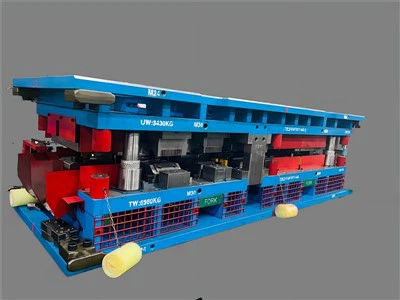
Heat treatment is a critical process in the manufacturing of washer stamping dies, significantly influencing their performance and longevity. As a washer stamping die supplier, I've witnessed firsthand how the right heat treatment can transform a basic die into a high - performing tool. In this blog, I'll delve into the various ways heat treatment affects the performance of a washer stamping die.
Hardness and Wear Resistance
One of the most apparent effects of heat treatment on a washer stamping die is the improvement of hardness. When a die is stamped repeatedly against metal sheets to form washers, it experiences a great deal of friction and wear. Through heat treatment processes such as quenching and tempering, the die's surface hardness can be increased substantially.
Quenching involves heating the die to a specific temperature and then rapidly cooling it. This process forms a hard martensitic structure on the die's surface. The increased hardness makes the die more resistant to abrasion and wear. For example, a die that has not undergone proper heat treatment may start to show signs of wear after a few thousand stamping cycles. In contrast, a heat - treated die can withstand tens or even hundreds of thousands of cycles before significant wear occurs.
Tempering, which follows quenching, is also crucial. It relieves the internal stresses created during quenching and improves the die's toughness while maintaining a high level of hardness. This balance between hardness and toughness is essential for a washer stamping die. A die that is too hard without proper tempering may become brittle and prone to cracking, while a die that is not hard enough will wear out quickly.
Dimensional Stability
Heat treatment can also enhance the dimensional stability of a washer stamping die. During the stamping process, the die is subjected to high pressures and temperatures. Without proper heat treatment, these conditions can cause the die to deform, leading to inaccurate washer dimensions.
By carefully controlling the heat treatment parameters, we can ensure that the die retains its shape and size over time. For instance, a well - heat - treated die will have a more stable microstructure, which is less likely to change under the influence of mechanical stress and thermal cycling. This means that the washers produced by the die will have consistent dimensions, meeting the strict quality requirements of our customers.
Fatigue Resistance
Washer stamping dies are often used in high - volume production environments, where they are subjected to cyclic loading. This cyclic loading can lead to fatigue failure, which is the gradual cracking and eventual breakdown of the die. Heat treatment can significantly improve the die's fatigue resistance.
The heat treatment process can refine the grain structure of the die material. A fine - grained structure is more resistant to fatigue cracking because it provides more obstacles for crack propagation. Additionally, heat treatment can introduce compressive residual stresses on the die's surface. These compressive stresses counteract the tensile stresses generated during cyclic loading, reducing the likelihood of crack initiation and growth.
Impact Resistance
In some cases, washer stamping dies may experience sudden impacts during the stamping process. This could be due to misfeeds or other operational issues. Heat treatment can improve the die's ability to withstand these impacts without suffering damage.
As mentioned earlier, the combination of hardness and toughness achieved through proper heat treatment is key. A die with good impact resistance can continue to function effectively even after experiencing occasional impacts, minimizing downtime and production losses.
Corrosion Resistance
Although corrosion may not be as immediate a concern as wear or fatigue in a washer stamping die, it can still affect the die's performance over time. Heat treatment can enhance the die's corrosion resistance.
Some heat treatment processes can form a protective oxide layer on the die's surface. This oxide layer acts as a barrier, preventing the underlying metal from coming into contact with corrosive substances such as moisture and chemicals. For example, nitriding is a heat treatment process that can improve both the hardness and corrosion resistance of the die.
Influence on Die Manufacturing Process
Heat treatment also has an impact on the overall die manufacturing process. It can affect the machinability of the die material. Before heat treatment, the die material is usually in a relatively soft state, which makes it easier to machine into the desired shape. However, after heat treatment, the increased hardness can make subsequent machining operations more challenging.

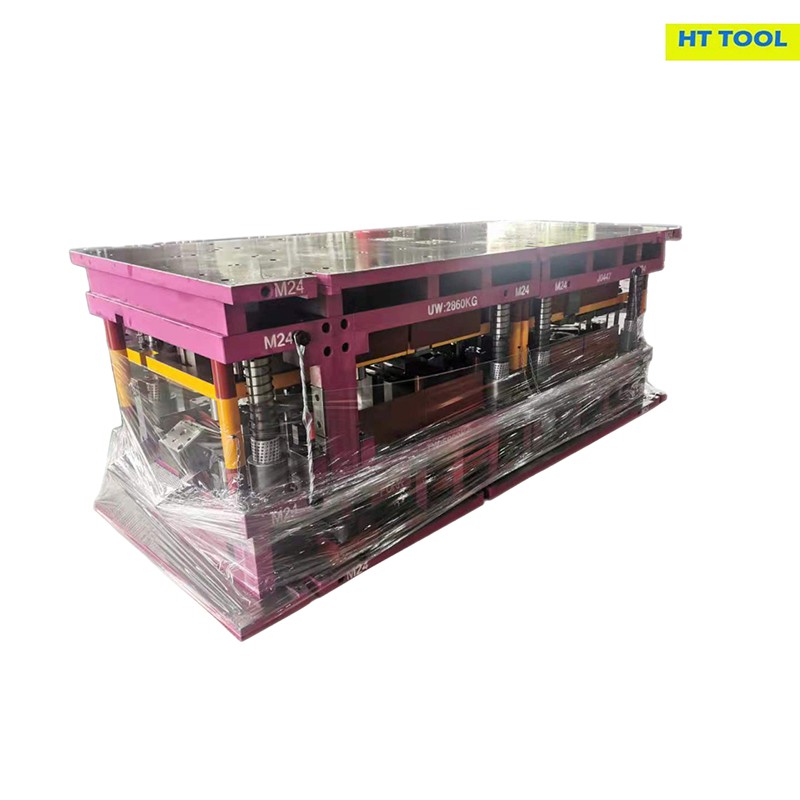
As a washer stamping die supplier, we need to carefully plan the heat treatment process in relation to the machining operations. For example, we may perform most of the machining before heat treatment and then carry out only minor finishing operations after heat treatment to ensure the die's final dimensions and surface finish are accurate.
Real - World Applications and Examples
In the real world, the performance improvements brought about by heat treatment are evident in our customers' production lines. For example, a customer who was using non - heat - treated dies was experiencing frequent die replacements due to excessive wear. After switching to our heat - treated dies, they were able to increase their production output by reducing the downtime associated with die changes.
Another customer was facing issues with inconsistent washer dimensions. After we provided them with heat - treated dies that had better dimensional stability, the quality of their washers improved significantly, leading to fewer rejects and higher customer satisfaction.
Conclusion and Call to Action
In conclusion, heat treatment plays a vital role in determining the performance of a washer stamping die. It affects hardness, wear resistance, dimensional stability, fatigue resistance, impact resistance, and corrosion resistance. As a washer stamping die supplier, we understand the importance of heat treatment and have developed advanced heat treatment processes to ensure that our dies meet the highest standards of performance.
If you are in the market for high - quality washer stamping dies, we invite you to contact us for a detailed discussion about your specific requirements. We are committed to providing you with the best - in - class dies that will enhance your production efficiency and product quality. You can also explore our other products such as Gas Stove Die, Progressive Die Tooling, and Progressive Die Metal Stamping to see if they meet your needs.
References
- Metals Handbook: Heat Treating, ASM International.
- Heat Treatment Principles and Techniques, by George E. Totten and D. Scott MacKenzie.
- Stamping Die Design and Manufacturing, by Joseph R. Davis.