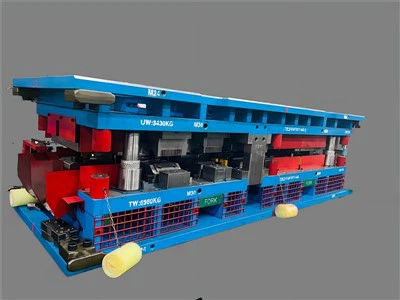
In the dynamic landscape of manufacturing, the question of whether a single casting die can produce complex shapes is both relevant and crucial. As a leading supplier of single casting dies, I've witnessed firsthand the remarkable capabilities and limitations of these tools. This blog post aims to explore the potential of single casting dies in creating intricate forms, delving into the science, techniques, and real-world applications that shape this field.
Understanding Single Casting Dies
Before we delve into the question of complex shapes, let's first understand what single casting dies are. A single casting die is a specialized tool used in the casting process, where molten material is poured into a mold cavity to create a solid object. These dies are typically made from high-strength materials such as steel or aluminum and are designed to withstand the high temperatures and pressures associated with casting.
Single casting dies offer several advantages over other manufacturing methods. They provide a high level of precision and repeatability, ensuring that each part produced is consistent in shape and size. They also allow for the production of parts with complex geometries that may be difficult or impossible to achieve using other techniques. Additionally, single casting dies can be used to produce parts in a variety of materials, including metals, plastics, and ceramics.
The Science Behind Complex Shape Production
The ability of a single casting die to produce complex shapes depends on several factors, including the design of the die, the properties of the material being cast, and the casting process itself. Let's take a closer look at each of these factors.
Die Design
The design of the single casting die plays a crucial role in determining the complexity of the shapes that can be produced. A well-designed die will have a cavity that is precisely shaped to match the desired part geometry. This requires careful consideration of factors such as draft angles, undercuts, and parting lines.
Draft angles are the angles that are added to the walls of the die cavity to allow for easy removal of the cast part. Undercuts, on the other hand, are features that prevent the part from being removed from the die without the use of special techniques. Parting lines are the lines where the two halves of the die meet, and they can have a significant impact on the surface finish and dimensional accuracy of the cast part.
To produce complex shapes, die designers often use advanced computer-aided design (CAD) software to create detailed 3D models of the part and the die. These models can be used to simulate the casting process and optimize the die design for maximum efficiency and quality.
Material Properties
The properties of the material being cast also play a crucial role in determining the complexity of the shapes that can be produced. Different materials have different melting points, viscosities, and shrinkage rates, which can affect the flow of the molten material into the die cavity and the final shape of the cast part.
For example, metals with high melting points and low viscosities, such as steel and aluminum, are often used to produce complex shapes because they can flow easily into the die cavity and fill all of the intricate details. Plastics, on the other hand, have lower melting points and higher viscosities, which can make it more difficult to produce complex shapes. However, advances in plastic injection molding technology have made it possible to produce complex plastic parts with high precision and quality.
Casting Process
The casting process itself also has a significant impact on the ability of a single casting die to produce complex shapes. There are several different casting processes available, each with its own advantages and limitations. Some of the most common casting processes include sand casting, investment casting, die casting, and injection molding.
Sand casting is a relatively simple and inexpensive casting process that is often used to produce large, heavy parts. Investment casting, also known as lost-wax casting, is a more precise and expensive casting process that is often used to produce complex shapes with high dimensional accuracy and surface finish. Die casting is a high-pressure casting process that is often used to produce small, intricate parts with high production rates. Injection molding is a widely used process for producing plastic parts, and it can be used to produce complex shapes with high precision and quality.
Real-World Applications
Single casting dies are used in a wide range of industries to produce complex shapes for a variety of applications. Some of the most common industries that use single casting dies include automotive, aerospace, medical, and consumer products.
Automotive Industry
In the automotive industry, single casting dies are used to produce a variety of parts, including engine blocks, transmission cases, and suspension components. These parts often have complex shapes and require high levels of precision and quality. Single casting dies allow automotive manufacturers to produce these parts efficiently and cost-effectively, while also ensuring that they meet the strict performance and safety standards of the industry.
Aerospace Industry
In the aerospace industry, single casting dies are used to produce critical components such as turbine blades, engine casings, and structural parts. These parts must be able to withstand extreme temperatures, pressures, and forces, and they require the highest levels of precision and quality. Single casting dies allow aerospace manufacturers to produce these parts with the necessary accuracy and reliability, while also reducing weight and improving fuel efficiency.


Medical Industry
In the medical industry, single casting dies are used to produce a variety of medical devices, including implants, surgical instruments, and diagnostic equipment. These parts must be biocompatible, corrosion-resistant, and able to meet the strict regulatory requirements of the industry. Single casting dies allow medical device manufacturers to produce these parts with the necessary precision and quality, while also ensuring that they are safe and effective for use in patients.
Consumer Products Industry
In the consumer products industry, single casting dies are used to produce a wide range of products, including toys, electronics, and household appliances. These products often have complex shapes and require high levels of aesthetics and functionality. Single casting dies allow consumer product manufacturers to produce these products efficiently and cost-effectively, while also ensuring that they meet the expectations of consumers.
Challenges and Limitations
While single casting dies offer many advantages for producing complex shapes, they also face several challenges and limitations. Some of the most common challenges and limitations include:
Cost
Single casting dies can be expensive to design and manufacture, especially for complex shapes. The cost of the die depends on several factors, including the size and complexity of the part, the material being used, and the casting process. Additionally, the cost of the die must be amortized over the production volume, which can make it difficult to justify the investment for low-volume production runs.
Lead Time
The lead time for designing and manufacturing a single casting die can be long, especially for complex shapes. This can delay the start of production and increase the time to market for new products. Additionally, any changes to the part design or the casting process may require modifications to the die, which can further increase the lead time and cost.
Design Constraints
The design of the single casting die can be limited by several factors, including the properties of the material being cast, the casting process, and the available manufacturing equipment. These design constraints can make it difficult to produce certain complex shapes or features, and they may require the use of alternative manufacturing methods or techniques.
Quality Control
The quality of the cast parts produced using a single casting die can be affected by several factors, including the design of the die, the properties of the material being cast, and the casting process. Ensuring consistent quality requires strict quality control measures, including inspection of the die, the raw materials, and the cast parts. Additionally, any defects or variations in the cast parts may require rework or scrap, which can increase the cost and lead time of production.
Conclusion
In conclusion, a single casting die can indeed produce complex shapes, but it requires careful consideration of several factors, including the design of the die, the properties of the material being cast, and the casting process. While single casting dies offer many advantages for producing complex shapes, they also face several challenges and limitations, including cost, lead time, design constraints, and quality control.
As a supplier of single casting dies, we understand the importance of providing our customers with high-quality, cost-effective solutions for producing complex shapes. We use advanced CAD software and simulation tools to optimize the design of our dies, and we work closely with our customers to ensure that their specific requirements are met. We also offer a range of casting processes and materials to choose from, allowing us to provide the best solution for each application.
If you are interested in learning more about our single casting die products and services, or if you have a specific project that you would like to discuss, please feel free to [contact us]. We look forward to working with you to help you achieve your manufacturing goals.
References
- "Casting: Process, Design, and Applications" by John Campbell
- "Manufacturing Engineering and Technology" by Serope Kalpakjian and Steven Schmid
- "Die Casting Handbook" by Jack Beecher