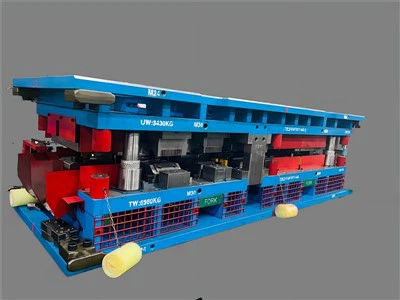
Can a Prototype Die be Used for Mass Production?
In the manufacturing industry, the question of whether a prototype die can be used for mass production is a crucial one. As a supplier of Prototype Die, I've encountered this query numerous times from clients, each with their own set of requirements and constraints. In this blog post, I'll delve into the intricacies of this topic, exploring the pros and cons, technical considerations, and real - world implications of using a prototype die for large - scale production.
Understanding Prototype Dies
Before we can determine if a prototype die can be used for mass production, it's essential to understand what a prototype die is. A prototype die is designed to create a small number of parts for testing and validation purposes. It allows manufacturers to evaluate the design, functionality, and manufacturability of a product before committing to full - scale production. Prototype dies are often fabricated more quickly and at a lower cost than production - grade dies, making them an attractive option for initial product development.

Advantages of Using a Prototype Die for Mass Production
- Cost - Savings in the Short - Term
One of the most significant advantages of using a prototype die for mass production is the potential for cost savings in the short - term. Since prototype dies are generally less expensive to manufacture than production dies, companies can save on upfront tooling costs. This can be especially beneficial for small - to - medium - sized enterprises or startups with limited budgets. - Faster Time to Market
Another advantage is the ability to get products to market more quickly. Prototype dies can be fabricated in a shorter time frame compared to production dies. By using a prototype die for initial mass production, companies can start selling their products earlier, which can be a competitive advantage in fast - paced markets. - Design Flexibility
Prototype dies offer greater design flexibility. If changes need to be made to the product design during the early stages of production, it is easier and less expensive to modify a prototype die than a production die. This allows for quick iterations and improvements based on customer feedback or market demands.
Disadvantages of Using a Prototype Die for Mass Production
- Limited Durability
One of the main drawbacks of using a prototype die for mass production is its limited durability. Prototype dies are typically made from less robust materials and may not be designed to withstand the high volume and repetitive stress associated with mass production. This can lead to premature wear and tear, resulting in frequent maintenance and replacement, which can increase costs in the long run. - Lower Precision and Quality
Prototype dies may not provide the same level of precision and quality as production dies. The manufacturing processes used for prototype dies are often less refined, which can result in parts with inconsistent dimensions or surface finishes. This can be a significant issue for industries where high precision and quality are critical, such as aerospace or medical device manufacturing. - Incompatibility with High - Speed Production
Mass production often involves high - speed manufacturing processes. Prototype dies may not be optimized for these high - speed operations, which can lead to reduced production efficiency and increased downtime.
Technical Considerations
- Material Selection
The choice of material for the prototype die is a critical factor. If the die is to be used for mass production, a more durable material should be considered. While traditional prototype die materials like aluminum or soft steel may be suitable for small - scale production, harder materials such as tool steel may be required for long - term, high - volume production. - Die Design and Complexity
The design and complexity of the die also play a role. Simple die designs are more likely to be suitable for mass production using a prototype die. However, complex dies with multiple features or intricate geometries may require a production - grade die to ensure consistent and accurate part production. - Production Volume and Rate
The intended production volume and rate are important considerations. For low - volume production runs, a prototype die may be sufficient. However, as the production volume increases, the limitations of the prototype die in terms of durability and speed become more apparent.
Real - World Examples
Let's consider a few real - world examples to illustrate the practical implications of using a prototype die for mass production.

In the automotive industry, a startup company developing a new electric vehicle component may use a prototype die to produce a small batch of parts for testing and initial market feedback. If the product receives positive reviews and the company decides to scale up production, they may initially continue using the prototype die to save on costs and get the product to market quickly. However, as the demand grows, they will likely need to invest in a production - grade die to ensure consistent quality and durability.
In the consumer electronics industry, a company launching a new smartphone accessory may use a Punch Riveting Die as a prototype die for initial production. This allows them to quickly produce a limited number of units for market testing. If the product is successful, they may face a decision on whether to continue using the prototype die or switch to a more robust Progressive Sheet Metal Dies for mass production.

Conclusion
In conclusion, while it is possible to use a prototype die for mass production, it is not always the best option. The decision depends on a variety of factors, including cost, time to market, design flexibility, durability, precision, and production volume. In some cases, using a prototype die for initial mass production can be a strategic move, especially for companies looking to save on upfront costs and quickly enter the market. However, as production volumes increase and quality requirements become more stringent, transitioning to a production - grade die may be necessary.

If you're considering using a prototype die for your production needs, or if you have questions about the suitability of a prototype die for mass production, I encourage you to reach out. Our team of experts can provide personalized advice and solutions based on your specific requirements. We're here to help you make the best decision for your manufacturing process and ensure the success of your product.
References
- "Tool and Die Making Handbook" by James R. Keeler
- "Manufacturing Engineering and Technology" by S. Kalpakjian and S. R. Schmid