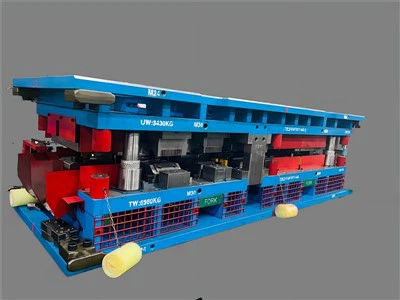
Can a prototype die be modified? This is a question I get asked a lot as a supplier of Prototype Die. And let me tell you, it's not a one - size - fits - all answer. So, let's dive right in and chat about it.
First off, it's important to understand what a prototype die is. A prototype die is basically a preliminary version of a die that's used to test out the design and functionality before moving on to full - scale production. It gives manufacturers a glimpse of how the final product will look and how the stamping process will work. One big advantage of a prototype die is that it allows for cost - effective testing. Instead of investing a fortune in a full - fledged production die right away, you can use a prototype die to iron out the kinks.
Now, to the main question: can it be modified? The short answer is yes, a prototype die can usually be modified. There are several reasons why you might want to make changes to a prototype die. For instance, during the testing phase, you might find that the dimensions of the stamped part aren't quite right. Maybe the part is supposed to fit into another component, but the size is off by a few millimeters. In such a case, modifying the prototype die is a great option.
Another reason could be related to the quality of the stamped part. You might notice that there are burrs or cracks on the part surface. This could be due to the die's cutting edges being too sharp or dull, or the die's clearance not being set correctly. Modifying the die can help improve the quality of the stamped parts.
There are different types of modifications that can be made to a prototype die. One common modification is adjusting the die's dimensions. This could involve machining the die to make it larger or smaller, or changing the shape of certain features. For example, if the die is used to stamp a hole in a metal sheet, and the hole size needs to be increased, the die can be modified by re - drilling or re - shaping the hole - punching area.


Surface finishing is another area where modifications can be made. If the stamped parts are coming out with a rough surface, the die's surface can be polished or coated to improve the finish of the parts. This not only enhances the aesthetic appeal of the parts but can also improve their functionality in some cases.
However, it's important to note that not all modifications are easy. Some modifications might require a high level of expertise and specialized equipment. For example, if you need to change the die's internal structure, such as the way the punches and dies are arranged, it can be a complex process. You'll need to have a deep understanding of the stamping process and the mechanics of the die.
When considering modifying a prototype die, you also need to think about the cost. Some simple modifications, like minor adjustments to the die's dimensions or surface finishing, might not cost too much. But more complex modifications, such as changing the die's internal structure, can be quite expensive. You'll have to weigh the cost of the modification against the benefits you'll get from it. For example, if modifying the die will save you a lot of money in the long run by reducing scrap rates and improving the quality of the final product, then it might be worth the investment.
Let's talk a bit about the relationship between prototype dies and other types of dies. Progressive Die Stamping is a popular method in the metal stamping industry. A progressive die can perform multiple operations in a single stroke as the metal strip moves through the die. A prototype die can serve as a starting point for developing a progressive die. By testing different designs and features in a prototype die, you can gather valuable information that can be used to optimize the progressive die design.
High Precision Stamping Die is another type that requires a high degree of accuracy. When modifying a prototype die to eventually turn it into a high - precision stamping die, you need to be extremely careful. Even the slightest error in the modification process can lead to significant problems in the final high - precision die. So, precision is key when making modifications to a prototype die for this purpose.
As a prototype die supplier, I've seen a wide range of situations where modifications were necessary. I've had customers come to me with issues like parts not fitting together correctly or having poor surface quality. In these cases, we worked together to identify the root cause of the problem and then made the appropriate modifications to the prototype die.
If you're in the process of working with a prototype die and think it might need some modifications, don't hesitate to reach out. We have a team of experienced engineers who can assess the situation and come up with the best solution for you. Whether it's a simple adjustment or a more complex modification, we're here to help. Modifying a prototype die can be a great way to optimize your stamping process and get the best possible results for your final product.
If you're considering purchasing a Prototype Die or need help with modifying an existing one, we'd love to have a chat with you. We're always happy to discuss your specific requirements and see how we can assist you in achieving your production goals. Contact us to start the conversation and let's work together to make your stamping project a success.
References
- Metal Stamping Handbook
- Die Design and Manufacturing Textbooks