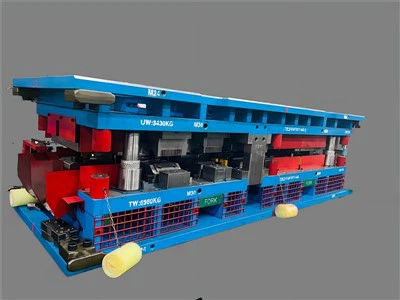
Hey there! As a supplier of Transfer Dies, I often get asked about the tolerance range of these essential tools. So, I thought I'd take a moment to break it down and share what I know.
First off, let's talk about what a Transfer Die is. In simple terms, a Transfer Die is a type of stamping die that transfers the workpiece from one station to another during the stamping process. This allows for multiple operations to be performed on a single piece of material, increasing efficiency and productivity. Transfer Dies are commonly used in the automotive, aerospace, and electronics industries, among others.
Now, onto the tolerance range. The tolerance range of a Transfer Die refers to the acceptable variation in the dimensions of the parts produced by the die. This variation can be caused by a number of factors, including the accuracy of the die itself, the quality of the material being stamped, and the operating conditions of the stamping press.
The tolerance range of a Transfer Die is typically specified in terms of plus or minus a certain amount. For example, a tolerance range of ±0.005 inches means that the actual dimensions of the parts produced by the die can vary by up to 0.005 inches from the specified dimensions. The specific tolerance range required for a particular application will depend on a number of factors, including the function of the part, the materials being used, and the manufacturing process.
So, how do we determine the appropriate tolerance range for a Transfer Die? Well, it's a bit of a balancing act. On the one hand, we want to ensure that the parts produced by the die meet the required specifications and function properly. On the other hand, we also want to keep the tolerance range as wide as possible to minimize the cost and complexity of the manufacturing process.
To determine the appropriate tolerance range, we typically start by working with the customer to understand their specific requirements. This may involve reviewing the design specifications for the part, discussing the intended function of the part, and considering any other factors that may affect the performance of the part. Based on this information, we can then recommend a tolerance range that meets the customer's needs while also being achievable within the constraints of the manufacturing process.
In addition to working with the customer, we also use a variety of tools and techniques to ensure that the Transfer Die meets the required tolerance range. This may include using precision machining equipment to manufacture the die, performing regular quality control checks during the manufacturing process, and using advanced metrology equipment to measure the dimensions of the parts produced by the die.
One of the key factors that can affect the tolerance range of a Transfer Die is the quality of the materials being used. For example, if the material being stamped is not uniform in thickness or hardness, it can cause variations in the dimensions of the parts produced by the die. To minimize this risk, we typically work with high-quality materials that are carefully selected and tested to ensure that they meet the required specifications.


Another important factor is the operating conditions of the stamping press. For example, if the press is not properly maintained or calibrated, it can cause variations in the force applied to the die, which can in turn affect the dimensions of the parts produced by the die. To minimize this risk, we typically work with customers to ensure that the stamping press is properly maintained and calibrated, and we also provide training and support to help them operate the press safely and effectively.
So, there you have it! That's a brief overview of the tolerance range of a Transfer Die. As you can see, it's a complex topic that requires careful consideration and attention to detail. But by working closely with our customers and using the latest tools and techniques, we're able to produce Transfer Dies that meet the highest standards of quality and precision.
If you're in the market for a Transfer Die, or if you have any questions about our products or services, please don't hesitate to [Contact us]. We'd be happy to discuss your specific requirements and help you find the right solution for your needs. And be sure to check out our Custom Stamping Dies, Casting Progressive Die, and Automotive Stamping Dies for more information.
References
- "Stamping Die Design Handbook" by Peter Ulintz
- "Metal Stamping Technology" by John A. Schey
- "Automotive Stamping and Assembly" by Richard A. Denton