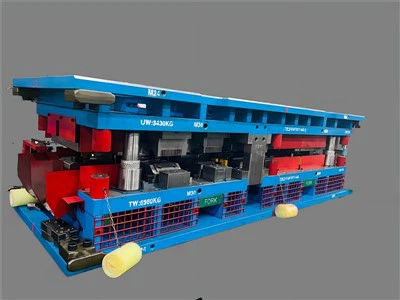
When it comes to manufacturing washer stamping dies, surface finish requirements play a crucial role in determining the quality, performance, and lifespan of the dies. As a seasoned washer stamping die supplier, I understand the significance of meeting and even exceeding these requirements to ensure optimal results for our clients. In this blog post, I will delve into the various aspects of surface finish requirements for washer stamping dies, including the importance, key factors, and industry standards.
Importance of Surface Finish in Washer Stamping Dies
The surface finish of a washer stamping die directly impacts the quality of the stamped washers. A smooth and uniform surface finish reduces friction between the die and the metal sheet during the stamping process. This, in turn, minimizes wear and tear on the die, extends its service life, and reduces the frequency of die maintenance and replacement. Additionally, a good surface finish helps to prevent galling, which is the adhesion of metal particles from the workpiece to the die surface. Galling can lead to poor surface quality of the stamped washers, dimensional inaccuracies, and even damage to the die.
Moreover, the surface finish of the die can affect the appearance of the stamped washers. A high - quality surface finish on the die results in washers with a smooth and clean surface, which is often a requirement in applications where aesthetics matter. In industries such as electronics, automotive, and home appliances, the visual appeal of the components can be a significant factor in the overall product quality.
Key Factors Affecting Surface Finish Requirements
Material of the Die
The material used to make the washer stamping die has a significant influence on the surface finish requirements. Different die materials, such as tool steel, carbide, and high - speed steel, have different inherent properties. For example, carbide is known for its hardness and wear resistance. Dies made of carbide can achieve a very high - quality surface finish, which is ideal for applications where precision and long - term performance are crucial. On the other hand, tool steel is more commonly used due to its cost - effectiveness, but it may require more careful surface treatment to achieve the desired finish.
Stamping Process
The type of stamping process employed also affects the surface finish requirements. In a simple blanking process, where the main goal is to cut the washer from the metal sheet, the surface finish requirements may be relatively less stringent compared to a process that involves forming or coining. Forming and coining processes require a more precise and smooth surface finish on the die to ensure accurate shaping of the washer and to prevent cracking or deformation of the workpiece.
Workpiece Material
The material of the washer being stamped is another important factor. Softer metals, such as aluminum and copper, are less likely to cause significant wear on the die surface compared to harder metals like stainless steel. However, softer metals may be more prone to galling, which means that the die surface finish needs to be smooth enough to prevent the metal particles from sticking. For harder metals, the die surface needs to be extremely hard and wear - resistant to withstand the high forces involved in the stamping process.


Industry Standards for Surface Finish
In the stamping industry, there are several standards and specifications for surface finish. One of the most commonly used parameters is the Ra value, which represents the arithmetic average of the absolute values of the surface profile deviations from the mean line. For washer stamping dies, the Ra value typically ranges from 0.2 to 1.6 micrometers, depending on the specific application.
In applications where high precision is required, such as in the electronics industry, the Ra value may be as low as 0.2 micrometers. This ensures that the stamped washers have a very smooth surface and precise dimensions. In less critical applications, such as general - purpose washers for construction or machinery, an Ra value of up to 1.6 micrometers may be acceptable.
Achieving the Desired Surface Finish
To achieve the desired surface finish for washer stamping dies, several manufacturing processes can be employed.
Machining
Precision machining is the first step in creating a die with the right surface finish. Computer - Numerical - Control (CNC) machining is widely used in the industry due to its high accuracy and repeatability. CNC milling and turning can produce a relatively smooth surface, but additional finishing processes are usually required to meet the strict surface finish requirements.
Grinding
Grinding is a common finishing process used to improve the surface finish of the die. It involves removing a small amount of material from the die surface using an abrasive wheel. Grinding can achieve a very high - quality surface finish with a low Ra value. Different types of grinding, such as surface grinding and cylindrical grinding, can be used depending on the shape and size of the die.
Polishing
Polishing is the final step in achieving an excellent surface finish for the die. It uses fine abrasives to further smooth the surface and remove any remaining scratches or imperfections. Polishing can be done manually or using automated polishing machines. Manual polishing allows for more control over the process, especially for complex - shaped dies, while automated polishing is more suitable for mass - produced dies.
Our Approach as a Washer Stamping Die Supplier
At our company, we take a comprehensive approach to meet the surface finish requirements of our clients. We start by carefully selecting the appropriate die material based on the specific application and workpiece material. Our experienced engineers use advanced CNC machining techniques to create the basic shape of the die with high precision.
After machining, we perform a series of testing and inspection procedures to ensure that the die meets the initial surface finish specifications. Then, we use a combination of grinding and polishing processes to further refine the surface finish. Our quality control team conducts final inspections using state - of - the - art measuring equipment to ensure that the Ra value and other surface finish parameters are within the required range.
We also offer a range of additional services to enhance the performance of our washer stamping dies. For example, we can apply special coatings to the die surface to improve its wear resistance and reduce friction. These coatings, such as titanium nitride (TiN) and diamond - like carbon (DLC), can significantly extend the service life of the die and improve the quality of the stamped washers.
Related Products and Applications
In addition to washer stamping dies, we also supply a wide range of other stamping dies for various industries. For home appliances, we offer Microwave Oven Die, Progressive Die Tooling, and Gas Stove Die. These dies are designed to meet the high - precision and quality requirements of the home appliance manufacturing industry.
Contact Us for Procurement and Consultation
If you are in the market for high - quality washer stamping dies or have any questions about surface finish requirements, we invite you to contact us. Our team of experts is ready to provide you with detailed information, technical support, and customized solutions to meet your specific needs. Whether you are a small - scale manufacturer or a large - scale industrial enterprise, we are committed to delivering the best products and services to help you achieve your production goals.
References
- "Stamping Die Design Handbook" by Peter Ulintz
- "Metal Forming: Processes and Analysis" by David R. Huddleston
- Industry standards and specifications from the American National Standards Institute (ANSI) and the International Organization for Standardization (ISO)