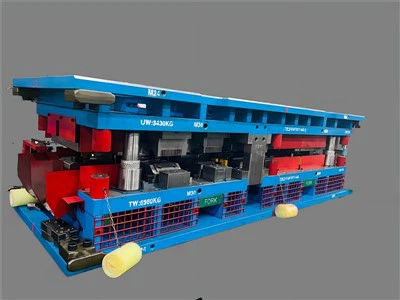
Stamping dies play a pivotal and often under - recognized role in the food processing machinery industry. As a supplier of stamping dies, I have witnessed firsthand how these precision tools contribute to the efficiency, quality, and innovation of food processing equipment.
The Fundamental Role of Stamping Dies in Food Processing Machinery
At the most basic level, stamping dies are used to shape and cut materials in the manufacturing process of food processing machinery. Food processing equipment needs to be made with high precision to ensure proper functioning. Whether it is the components of a conveyor belt, the blades of a slicer, or the frames of mixing machines, stamping dies are crucial in creating these parts with consistent dimensions and shapes.
The ability to precisely cut and shape metal sheets is one of the key functions of stamping dies. For example, in the production of cylindrical containers for food products, stamping dies are used to cut and form the metal sheets into the appropriate size and curvature. This not only ensures a perfect fit when assembling the containers but also maintains the structural integrity of the final product, preventing any potential leaks or contamination.
In addition, stamping dies are used to create complex patterns and designs on the surfaces of food processing machinery parts. These patterns can serve both aesthetic and functional purposes. Some patterns may be designed to improve the grip of certain components for better handling during operation, while others may be purely decorative, enhancing the overall appearance of the equipment.
Improving Efficiency in Production
One of the greatest advantages of using stamping dies in the food processing machinery industry is the significant improvement in production efficiency. Stamping processes are highly automated, which means that large quantities of identical parts can be produced in a relatively short period. This high - volume production is essential for meeting the growing demand for food processing equipment in the market.
Moreover, stamping dies are designed to work at high speeds with minimal downtime. Once the die is properly set up, it can continue to produce parts with consistent quality, reducing the need for frequent manual intervention. This not only saves time but also labor costs for manufacturers of food processing machinery.
Another aspect of efficiency improvement is the waste reduction. Stamping dies are designed to cut materials in a way that maximizes the use of the raw material, minimizing scrap. In the food processing industry, where cost - effectiveness is a major concern, this waste reduction can lead to significant savings over time.
Ensuring Quality in Food Processing
Quality is of utmost importance in the food processing industry, as any malfunction or contamination in the processing equipment can have serious consequences for consumer health. Stamping dies play a critical role in ensuring the quality of food processing machinery.
First of all, the precision of stamping dies guarantees the accurate dimensions of the parts produced. This accuracy is vital for the proper functioning of the food processing equipment. For example, in a packaging machine, even a slight deviation in the size of a sealing component can result in poorly sealed packages, leading to spoilage of the food products.
Secondly, stamping dies can be made from high - quality materials such as tool steel, which has excellent wear resistance. This means that the dies can maintain their shape and performance over a long period of time, resulting in consistent part quality. In the food processing environment, where equipment is often used continuously, this long - term reliability is essential.
Innovation in Food Processing Machinery
Stamping dies also drive innovation in the food processing machinery industry. With the development of new stamping technologies, such as transfer die stamping, more complex and sophisticated parts can be produced. Transfer die stamping allows for the production of parts with multiple operations in a single die, which was previously difficult or impossible to achieve.
This technology enables the creation of new and improved food processing equipment designs. For example, new types of slicing machines can be developed with more precise cutting blades, or more efficient mixing machines can be designed with better - shaped mixing paddles. These innovations not only improve the performance of the food processing machinery but also open up new possibilities for the food industry itself, such as the production of new food products or more efficient packaging solutions.
Customization for Diverse Food Processing Needs
The food processing industry is diverse, with different types of food products requiring different processing equipment. Stamping dies offer a high degree of customization, allowing manufacturers to produce parts that meet the specific requirements of different food processing applications.
For instance, the dairy industry may require different types of processing equipment compared to the meat industry. Stamping dies can be designed to create parts for specialized dairy processing equipment, such as butter churns or cheese slicers, with unique features to ensure the best product quality. Similarly, for the meat processing industry, stamping dies can be used to make parts for meat grinders or sausage stuffers with the appropriate durability and precision.
Our Role as a Stamping Die Supplier
As a stamping die supplier, our mission is to provide high - quality, customized stamping dies to the food processing machinery industry. We work closely with our customers to understand their specific needs and design dies that meet or exceed their expectations.
We have a team of experienced engineers who are experts in stamping die design and manufacturing. They use the latest CAD/CAM technology to create detailed die designs, ensuring the highest level of precision. Our manufacturing processes are also strictly controlled to ensure that each die meets the highest quality standards.
In addition to design and manufacturing, we also offer after - sales service, including die maintenance and repair. We understand that the continuous operation of food processing machinery is crucial, so we are committed to providing prompt and reliable service to minimize any downtime.
Conclusion
In conclusion, stamping dies play a multi - faceted role in the food processing machinery industry. They are essential for shaping and cutting parts, improving production efficiency, ensuring quality, driving innovation, and providing customization. As a stamping die supplier, we are proud to be part of this important industry and to contribute to the development of high - quality food processing equipment.
If you are in the food processing machinery manufacturing business and are looking for reliable stamping die solutions, we would love to hear from you. Please reach out to us to discuss your specific requirements and explore how we can help you take your production to the next level.

References
- Smith, J. (2018). Precision Manufacturing in the Food Processing Industry. Journal of Food Machinery, 34(2), 123 - 135.
- Johnson, A. (2019). The Impact of Stamping Technology on Industrial Efficiency. Manufacturing Review, 45(3), 78 - 90.
- Brown, C. (2020). Customization in the Food Processing Equipment Industry. Food Industry Insights, 21(4), 56 - 65.