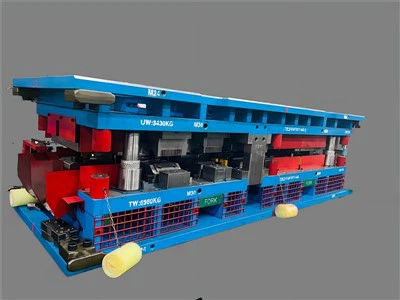
In the manufacturing industry, washer stamping dies play a crucial role in the mass - production of washers. As a professional washer stamping die supplier, I have witnessed firsthand how the hardness of the material can significantly impact the performance and lifespan of these dies. In this blog, I will delve into the various aspects of how material hardness affects washer stamping dies.
1. Basics of Washer Stamping Dies
Washer stamping dies are precision tools used to cut, shape, and form washers from sheet metal. They are designed to work with high - speed stamping presses, enabling efficient and accurate production. The quality of the stamping die directly affects the quality of the washers produced, including their dimensions, surface finish, and mechanical properties.

2. Impact on Die Wear
One of the most obvious impacts of material hardness on washer stamping dies is die wear. When the material being stamped is very hard, it exerts a greater force on the die during the stamping process. This increased force can lead to accelerated wear of the die surfaces.
Hard materials, such as high - carbon steels or certain alloys, have a high resistance to deformation. As the die presses against these materials, the cutting edges and forming surfaces of the die are subjected to intense friction and abrasion. Over time, this can cause the die edges to become dull, and the forming surfaces to lose their precision. For example, if a die is used to stamp washers from a material with a Rockwell hardness of over 50 HRC, the wear rate can be several times higher than when stamping a softer material like aluminum.
To mitigate this issue, die manufacturers often use high - speed steels (HSS) or carbide materials for the die components. These materials have high hardness and wear resistance. High - speed steels can maintain their hardness at high temperatures generated during the stamping process, while carbide materials are extremely hard and can withstand the abrasive forces exerted by hard materials. However, using these advanced materials also increases the cost of the die.
3. Influence on Die Strength
The hardness of the stamped material also affects the strength requirements of the washer stamping die. Harder materials require more force to be stamped, which means the die must be able to withstand higher stresses without deforming or breaking.

If the die is not strong enough to handle the forces generated by stamping a hard material, it may experience cracking or chipping. For instance, when stamping washers from a thick stainless - steel sheet with high hardness, the die must have sufficient strength in its structural components, such as the die block and the punch holder. A die made from a material with low strength may fail prematurely, leading to costly downtime and production losses.
To ensure the die has adequate strength, proper design and material selection are essential. The die structure should be optimized to distribute the stresses evenly, and the material should have a high yield strength and toughness. For example, some die manufacturers use alloy steels with appropriate heat - treatment processes to enhance the strength and toughness of the die.
4. Effect on Dimensional Accuracy
The hardness of the material can have a significant impact on the dimensional accuracy of the washers produced by the stamping die. Hard materials are more difficult to deform precisely, which can lead to variations in the dimensions of the washers.
During the stamping process, the die must be able to cut and form the material accurately. If the material is too hard, it may not flow smoothly into the die cavities, resulting in incomplete filling or uneven thickness of the washers. This can cause the washers to deviate from the required dimensions. For example, when stamping a hard copper alloy, the die may not be able to cut the material cleanly, leaving burrs or rough edges on the washers.

To achieve high dimensional accuracy when stamping hard materials, the die design needs to be more precise. The clearances between the punch and the die must be carefully controlled to ensure proper cutting and forming. Additionally, the die surface finish should be very smooth to reduce friction and facilitate the flow of the material.
5. Impact on Die Life
The overall life of a washer stamping die is closely related to the hardness of the material being stamped. As mentioned earlier, hard materials cause more wear and stress on the die, which can significantly reduce its lifespan.
A die used for stamping soft materials like brass or mild steel can typically produce a large number of washers before it needs to be replaced or re - sharpened. However, when stamping hard materials, the die may need to be serviced or replaced much more frequently. For example, a die used for stamping aluminum washers may be able to produce hundreds of thousands of pieces, while a die used for stamping high - strength alloy washers may only be able to produce tens of thousands of pieces before significant wear occurs.
To extend the die life when stamping hard materials, regular maintenance and proper lubrication are crucial. Lubricants can reduce friction between the die and the material, thereby reducing wear. Regular inspection and re - sharpening of the die edges can also help to maintain its performance and extend its lifespan.
6. Considerations for Different Types of Dies
In our business as a washer stamping die supplier, we offer various types of dies, such as Progressive Die Tooling, Microwave Oven Die, and Tandem Die. Each type of die has different requirements and responses to the hardness of the stamped material.
Progressive die tooling is often used for high - volume production. When stamping hard materials with progressive dies, the multiple stations in the die need to be carefully designed to handle the increased forces and wear. The die components in progressive dies should be made from materials with high hardness and wear resistance to ensure long - term performance.
Microwave oven dies are designed for specific applications in the home appliance industry. These dies need to produce washers with high precision and quality. When stamping hard materials for microwave oven parts, the die must be able to maintain its dimensional accuracy and surface finish. Special attention should be paid to the heat - treatment and coating of the die to improve its performance.
Tandem dies are used when higher production rates are required. When stamping hard materials with tandem dies, the synchronization of the two dies and the distribution of the forces are critical. The die structure should be robust enough to handle the high - speed stamping of hard materials without failure.
7. Conclusion and Call to Action
In conclusion, the hardness of the material has a profound impact on washer stamping dies. It affects die wear, strength, dimensional accuracy, and overall die life. As a washer stamping die supplier, we understand these challenges and have the expertise to design and manufacture dies that can effectively handle materials of different hardness levels.
If you are in the market for high - quality washer stamping dies that can meet the demands of your specific materials, we invite you to contact us for a detailed discussion. Our team of experts will work closely with you to understand your requirements and provide you with the best die solutions. Whether you need a die for stamping soft or hard materials, we have the experience and resources to deliver excellent results.
References
- Kalpakjian, S., & Schmid, S. R. (2013). Manufacturing Engineering and Technology. Pearson.
- Dieter, G. E. (1986). Mechanical Metallurgy. McGraw - Hill.
- Groover, M. P. (2010). Fundamentals of Modern Manufacturing: Materials, Processes, and Systems. Wiley.