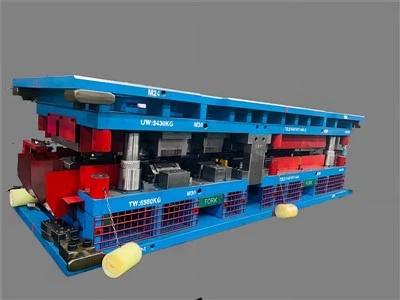
Machined parts are the unsung heroes of modern industry, serving as the fundamental building blocks that enable the functionality of countless products across a wide range of sectors. As a seasoned machined parts supplier, I've witnessed firsthand the diverse applications of these precision - crafted components. In this blog, I will explore the industries that commonly use machined parts, shedding light on their crucial roles and the types of parts they often require.
Automotive Industry
The automotive industry is one of the largest consumers of machined parts. From the engine to the transmission, brakes, and suspension systems, machined parts are essential for the proper functioning of vehicles. For instance, engine blocks, cylinder heads, and pistons are all intricately machined to precise specifications to ensure optimal performance and efficiency. These parts need to withstand high temperatures, pressures, and mechanical stresses, which demands high - quality machining techniques.
Turned parts are widely used in the automotive sector. They can be found in various components such as shafts, bolts, and nuts. Turned Parts offer excellent dimensional accuracy and surface finish, making them ideal for automotive applications. Additionally, brass parts are also popular due to their corrosion resistance and electrical conductivity. They are used in electrical connectors, radiator cores, and other components. Brass Parts can be machined to complex shapes, meeting the specific requirements of automotive manufacturers.
Aerospace Industry
The aerospace industry places extremely high demands on the quality and precision of machined parts. Components used in aircraft and spacecraft must be lightweight, strong, and able to withstand extreme conditions. Machined parts are used in engines, airframes, landing gear, and avionics systems.
In the engine, turbine blades, compressor disks, and fuel nozzles are all machined with the utmost precision. These parts are often made from high - performance materials such as titanium alloys and nickel - based superalloys. CNC machining is the primary method for manufacturing these parts, as it allows for the production of complex geometries with tight tolerances. CNC Machining Small Parts are also crucial in aerospace avionics, where miniaturization and high reliability are key requirements.
Medical Industry
The medical industry relies heavily on machined parts for the production of medical devices and equipment. From surgical instruments to implantable devices, precision is of the essence to ensure patient safety and the effectiveness of treatments.
Surgical instruments such as forceps, scalpels, and clamps are machined to exacting standards to provide the necessary functionality and durability. Implantable devices like hip and knee replacements, dental implants, and pacemakers require high - precision machining to fit perfectly within the human body and integrate with surrounding tissues. Machined parts in the medical industry are often made from biocompatible materials such as stainless steel, titanium, and certain polymers.
Electronics Industry
In the electronics industry, machined parts play a vital role in the production of electronic devices. Enclosures, heat sinks, connectors, and printed circuit board (PCB) fixtures are all examples of machined parts used in this sector.


Enclosures protect electronic components from environmental factors and provide electromagnetic shielding. They are typically machined from metals such as aluminum or plastics. Heat sinks are used to dissipate heat generated by electronic components, ensuring their stable operation. CNC machining is commonly used to create heat sinks with complex fin structures for maximum heat transfer efficiency. Connectors, on the other hand, require high - precision machining to ensure reliable electrical connections.
Industrial Machinery Industry
The industrial machinery industry encompasses a wide range of equipment, including manufacturing machines, construction equipment, and agricultural machinery. Machined parts are used in various components of these machines, such as gears, shafts, bearings, and hydraulic cylinders.
Gears are essential for power transmission and speed control in industrial machinery. They need to be machined with high precision to ensure smooth operation and minimize noise. Shafts transmit torque and rotational motion, and their dimensional accuracy is crucial for the proper functioning of the entire machine. Bearings reduce friction and support rotating parts, and they are machined to tight tolerances to ensure long - term reliability. Hydraulic cylinders, which are used for linear motion, require machined pistons and cylinders with excellent surface finish and dimensional accuracy.
Energy Industry
The energy industry, including oil and gas, renewable energy, and power generation, also has a significant demand for machined parts. In the oil and gas sector, drilling equipment, valves, and pumps rely on machined parts for their operation. These parts need to be able to withstand harsh environments, high pressures, and corrosive substances.
In the renewable energy field, wind turbines and solar panels use machined parts in their construction. For example, wind turbine blades are often made with precision - machined molds, and the gearboxes and generators in wind turbines contain numerous machined components. Solar panel frames and tracking systems also require machined parts for proper installation and adjustment.
Consumer Goods Industry
The consumer goods industry produces a wide variety of products for everyday use, such as appliances, furniture, and sporting goods. Machined parts are used in these products to enhance their functionality and durability.
In appliances, machined parts can be found in motors, compressors, and control mechanisms. For example, the compressor in a refrigerator or air - conditioner contains machined pistons and cylinders. Furniture may use machined hardware such as hinges, drawer slides, and handles. Sporting goods like bicycles, golf clubs, and tennis rackets also incorporate machined parts for better performance.
Conclusion
As we have seen, machined parts are indispensable in a wide range of industries. Their precision, durability, and functionality make them essential for the production of high - quality products. Whether it's the automotive, aerospace, medical, electronics, industrial machinery, energy, or consumer goods industry, the demand for machined parts continues to grow.
As a machined parts supplier, I am committed to providing high - quality components that meet the specific needs of each industry. Our state - of - the - art manufacturing facilities and experienced team of engineers ensure that we can produce parts with the highest level of precision and quality.
If you are in need of machined parts for your industry, I encourage you to reach out to us for a consultation. We can work together to understand your requirements and provide you with the best solutions. Let's collaborate to bring your products to the next level with our top - notch machined parts.
References
- ASM Handbook, Volume 16: Machining, ASM International
- "Precision Machining for the Aerospace Industry" by John Doe, Aerospace Manufacturing Magazine
- "Medical Device Manufacturing: Precision Machining Techniques" by Jane Smith, Medical Technology Journal
- "The Role of Machined Parts in the Automotive Industry" by Robert Johnson, Automotive Engineering Review