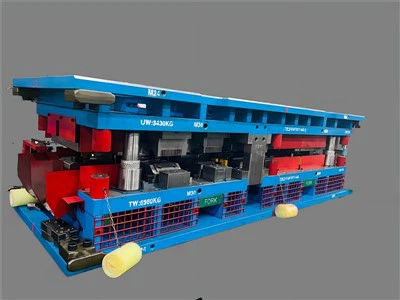
Hey there! As a supplier of Tandem Dies, I've got a ton of knowledge about these nifty tools. Today, I'm gonna break down the technical parameters of a tandem die for you.
First off, let's talk about what a tandem die is. A tandem die is a type of stamping die that allows multiple operations to be carried out in a single pass. It's a game - changer in the manufacturing world, especially for high - volume production.
Die Size and Dimensions
The size of a tandem die is a crucial parameter. It's determined by the size of the parts you're going to stamp. You need to consider both the length and width of the die. For example, if you're stamping large components for appliances like Gas Stove Die, the die has to be big enough to accommodate the entire part. The height of the die also matters, as it affects how it fits into the stamping press. A taller die might require a press with a larger opening height.
Tonnage Capacity
Tonnage capacity is another vital parameter. It refers to the amount of force the die can withstand during the stamping process. This is directly related to the material you're stamping and the complexity of the operation. If you're stamping thick or hard materials, you'll need a tandem die with a higher tonnage capacity. For instance, stamping steel alloys might require a die that can handle a much higher tonnage compared to stamping aluminum. A die with insufficient tonnage capacity can lead to premature wear and tear, and even breakage.


Clearance
Clearance is the space between the punch and the die. It's a super important factor that affects the quality of the stamped parts. If the clearance is too small, the punch can get stuck in the die, causing damage to both the die and the part. On the other hand, if the clearance is too large, the edges of the stamped part will be rough and uneven. The ideal clearance depends on the material thickness and type. For thin materials, a smaller clearance is usually required, while thicker materials need a larger clearance.
Die Life
Die life is a key consideration. It's the number of parts a die can produce before it needs to be replaced or refurbished. A long - lasting die is cost - effective in the long run. Factors that affect die life include the material of the die, the hardness of the material being stamped, and the stamping speed. High - quality die materials like tool steel can significantly extend the die life. Also, proper maintenance, such as regular cleaning and lubrication, can help increase the die life.
Precision and Tolerance
Precision and tolerance are all about how accurately the die can produce parts. In the manufacturing world, even the slightest deviation can lead to parts that don't fit together properly. The precision of a tandem die is measured by how closely the stamped parts match the design specifications. Tolerance, on the other hand, is the acceptable range of variation from the ideal dimensions. For example, in Progressive Die Tooling, which often works in conjunction with tandem dies, high precision and tight tolerances are crucial for ensuring the quality of the final product.
Feed System Compatibility
The feed system is what moves the material through the die during the stamping process. A tandem die needs to be compatible with the feed system you're using. There are different types of feed systems, such as roller feeds and servo feeds. The die's design should allow for smooth and accurate feeding of the material. If the die and the feed system are not compatible, it can lead to misaligned parts and production delays.
Stripping Force
Stripping force is the force required to remove the stamped part from the die. It's affected by factors like the shape of the part, the material, and the clearance. If the stripping force is too high, it can cause damage to the part or the die. Designers need to optimize the die's geometry to reduce the stripping force. For example, using proper draft angles on the die can make it easier to strip the part.
Number of Stations
The number of stations in a tandem die determines how many operations can be carried out in a single pass. More stations mean more complex parts can be produced efficiently. For example, a die with multiple stations can perform cutting, bending, and forming operations all at once. However, adding more stations also increases the complexity of the die and the stamping process.
Material of the Die
The material of the die plays a huge role in its performance. As I mentioned earlier, tool steel is a popular choice because of its high hardness and wear resistance. Other materials like carbide can also be used for specific applications, especially when stamping very hard materials. The choice of material depends on factors like the type of material being stamped, the production volume, and the required die life.
Lubrication Requirements
Lubrication is essential for the smooth operation of a tandem die. It reduces friction between the punch and the die, which in turn reduces wear and heat generation. Different materials and stamping processes require different types of lubricants. For example, stamping aluminum might require a different lubricant compared to stamping steel. Proper lubrication also helps improve the surface finish of the stamped parts.
Now that you've got a good understanding of the technical parameters of a tandem die, you might be wondering how these dies can benefit your production process. Well, tandem dies offer high - speed production, which means you can churn out a large number of parts in a short time. They also improve the quality of the parts, thanks to their precision and the ability to perform multiple operations in one go.
If you're in the market for a tandem die, I'd love to have a chat with you. Our Tandem Die products are designed with these technical parameters in mind to ensure optimal performance. Whether you're in the home appliance industry or any other manufacturing sector, we can provide you with a die that meets your specific needs. Don't hesitate to reach out and start a conversation about your requirements. We're here to help you take your production to the next level.
References
- "Stamping Die Design Handbook"
- "Manufacturing Processes for Engineering Materials"