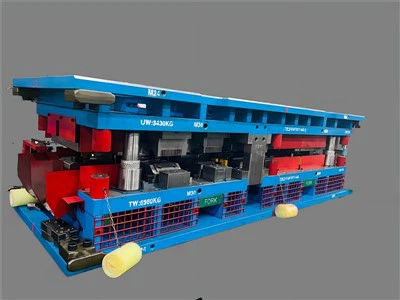
As a seasoned supplier of Punch Riveting Dies, I've witnessed firsthand the critical role these tools play in various manufacturing processes. Over time, like any mechanical component, punch riveting dies will show signs of wear and tear that necessitate replacement. Recognizing these signs early can save manufacturers time, money, and prevent production disruptions. In this blog post, I'll share some key indicators that it's time to replace your punch riveting die.
Deteriorating Rivet Quality
One of the most obvious signs that a punch riveting die needs replacement is a decline in the quality of the rivets. If you notice that the rivets are not being formed correctly, such as being misshapen, having inconsistent head sizes, or not being fully seated, it could be a sign that the die is worn out. A worn die may not be able to apply the necessary force evenly, resulting in poor-quality rivets. For example, if the die's cutting edges are dull, the rivet may not be cut cleanly, leading to rough edges or burrs. This can affect the structural integrity of the assembled parts and may even cause them to fail prematurely.
Increased Force Requirements
Another telltale sign is an increase in the force required to operate the punch riveting die. As the die wears, the friction between the die and the workpiece increases, which means more force is needed to achieve the same result. If you find that your punching machine is struggling to operate the die or if you notice a significant increase in the power consumption, it's likely that the die is nearing the end of its lifespan. Continuing to use a die that requires excessive force can not only damage the die further but also put additional stress on the punching machine, leading to more frequent breakdowns and costly repairs.
Excessive Wear and Tear
Inspecting the die regularly for visible signs of wear is essential. Look for signs of abrasion, cracking, or chipping on the die's surfaces. These can indicate that the die has been subjected to excessive stress or that the material used to make the die is not suitable for the application. For instance, if the die is used in a high-volume production environment, the constant impact and friction can cause the die to wear out faster. In some cases, small cracks or chips may not seem like a big deal at first, but they can quickly spread and cause the die to fail completely. If you notice any of these signs, it's time to consider replacing the die.
Inconsistent Rivet Placement
Consistent rivet placement is crucial for the proper assembly of parts. If you start to notice that the rivets are being placed in the wrong locations or that there is a significant variation in the spacing between rivets, it could be a sign that the die is misaligned or worn. A misaligned die can cause the rivets to be placed at an angle, which can affect the strength and stability of the assembled parts. Additionally, inconsistent rivet placement can make it difficult to assemble the parts correctly, leading to production delays and increased scrap rates.
Poor Surface Finish
The surface finish of the riveted parts can also provide clues about the condition of the punch riveting die. If the parts have a rough or uneven surface finish, it could be a sign that the die is not functioning properly. A worn die may not be able to form the rivets smoothly, resulting in a poor surface finish. This can be a problem, especially if the parts are intended for applications where a smooth surface is required, such as in the automotive or aerospace industries.
Frequent Jamming
Jamming is another common problem that can indicate a need for die replacement. If the die keeps getting jammed during the riveting process, it could be due to a variety of factors, such as worn-out components, debris buildup, or misalignment. Frequent jamming can not only slow down production but also cause damage to the die and the punching machine. If you've tried cleaning the die and adjusting the machine settings but the jamming persists, it's likely that the die needs to be replaced.
Cost-Effectiveness
Finally, it's important to consider the cost-effectiveness of replacing the punch riveting die. While it may seem expensive to replace a die, it can actually save you money in the long run. A worn-out die can lead to increased production costs due to poor-quality rivets, increased scrap rates, and more frequent machine breakdowns. By replacing the die before it fails completely, you can avoid these costly problems and ensure that your production process runs smoothly.


In conclusion, recognizing the signs that a punch riveting die needs to be replaced is crucial for maintaining the efficiency and quality of your manufacturing process. As a supplier of high-quality High Precision Stamping Die, Prototype Die, and high speed stamping die, we understand the importance of providing reliable and durable tools. If you're experiencing any of the issues mentioned above, or if you have any questions about our products, please don't hesitate to contact us. We're here to help you find the right solution for your specific needs and ensure that your production process runs smoothly.
References
- Smith, J. (2020). "The Importance of Regular Die Maintenance in Manufacturing." Journal of Manufacturing Technology, 15(2), 45-52.
- Johnson, R. (2019). "Signs of Die Wear and When to Replace Them." Industrial Engineering Magazine, 22(3), 67-74.
- Brown, A. (2018). "Cost-Effective Die Replacement Strategies." Manufacturing Insights, 18(4), 33-41.