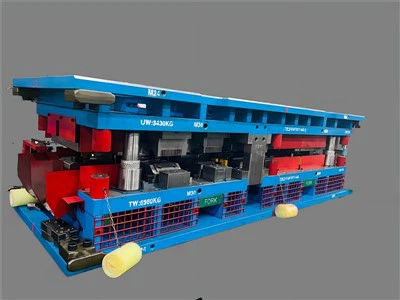
Hey there! As a high speed stamping supplier, I've been getting a lot of questions lately about the noise levels in high speed stamping operations. So, I thought I'd write this blog to share some insights on this topic.
First off, let's talk about what high speed stamping is. High speed stamping is a manufacturing process that uses a stamping press to form metal parts at a very high rate. It's commonly used in industries like automotive, electronics, and aerospace to produce a large number of parts quickly and efficiently. But with this high - speed operation comes a significant amount of noise.
Understanding the Noise Sources in High Speed Stamping
There are several sources of noise in high speed stamping operations. One of the main sources is the impact between the stamping die and the metal sheet. When the press ram comes down at high speed and hits the die, it creates a sudden shockwave, which generates a loud noise. This impact noise can be quite intense, especially when the stamping speed is high.
Another source of noise is the vibration of the stamping press itself. The mechanical components of the press, such as the crankshaft, gears, and bearings, vibrate during operation. These vibrations are transferred to the frame of the press and then radiated as noise. The faster the press operates, the more intense the vibrations and the louder the noise.
The movement of the metal strip through the die also contributes to the noise. As the metal is fed into the die and formed, there is friction between the metal and the die surfaces. This friction can produce a screeching or hissing sound, especially if the metal surface is rough or the die is not properly lubricated.
Measuring Noise Levels in High Speed Stamping
To understand the noise levels in high speed stamping, we need to measure them. Noise is typically measured in decibels (dB). A sound level meter is used to measure the noise level at different points around the stamping press.
In a high speed stamping environment, the noise levels can vary depending on several factors. The stamping speed is one of the most important factors. Generally, the higher the stamping speed, the louder the noise. For example, at a low stamping speed of around 100 strokes per minute, the noise level might be around 80 - 85 dB. But when the stamping speed increases to 500 strokes per minute or more, the noise level can easily exceed 95 dB.


The type of metal being stamped also affects the noise level. Harder metals, like stainless steel, tend to produce more noise than softer metals, such as aluminum. This is because the impact between the die and the harder metal creates a more intense shockwave.
The design and condition of the stamping die also play a role. A well - designed die with smooth surfaces and proper clearances will produce less noise than a poorly designed or worn - out die. For instance, if the die has sharp edges or uneven surfaces, it can cause more friction and vibration, leading to higher noise levels.
The Impact of High Noise Levels
High noise levels in high speed stamping operations can have several negative impacts. First of all, it's a major health hazard for the workers. Prolonged exposure to noise levels above 85 dB can cause hearing loss. Workers in high speed stamping facilities are at a high risk of developing noise - induced hearing loss if proper hearing protection is not provided.
In addition to hearing loss, high noise levels can also cause other health problems, such as stress, fatigue, and high blood pressure. These health issues can reduce the productivity and well - being of the workers.
From a business perspective, high noise levels can also lead to increased costs. For example, if the noise levels exceed the regulatory limits, the company may face fines and penalties. Moreover, high noise levels can be a nuisance to the neighboring areas, which may lead to complaints and potential legal issues.
Controlling Noise Levels in High Speed Stamping
So, what can we do to control the noise levels in high speed stamping operations? There are several strategies that we can adopt.
One of the most effective ways is to use noise - reducing materials and designs in the stamping press. For example, we can use vibration - damping materials in the press frame to reduce the vibration and noise radiation. We can also design the press with better insulation to prevent the noise from escaping.
Proper maintenance of the stamping press and the die is also crucial. Regularly lubricating the moving parts of the press and the die can reduce friction and vibration, which in turn reduces the noise level. Replacing worn - out components, such as bearings and gears, can also help to keep the noise levels under control.
Another strategy is to use sound enclosures around the stamping press. A sound enclosure is a structure that surrounds the press and absorbs or reflects the noise. It can significantly reduce the noise level in the surrounding area. However, the design and installation of a sound enclosure need to be carefully planned to ensure that it does not interfere with the operation of the press.
Our Solutions as a High Speed Stamping Supplier
As a high speed stamping supplier, we are committed to providing our customers with high - quality stamping services while minimizing the noise levels. We use advanced stamping technologies and equipment that are designed to be more energy - efficient and less noisy.
We also offer a wide range of stamping dies, such as Progressive Tool Sheet Metal and Prototype Die and Prototype Die. These dies are designed with precision to ensure smooth operation and reduce noise. Our team of experts can also provide customized solutions based on your specific requirements.
If you're looking for a reliable high speed stamping supplier, don't hesitate to contact us. We can help you with all your stamping needs while keeping the noise levels in check. Whether you need a small - scale prototype or a large - scale production run, we've got you covered.
References
- "Industrial Noise Control and Acoustics" by Clarence W. Harris.
- "Handbook of Noise and Vibration Control" by Cyril M. Harris.
- Various industry reports on high speed stamping operations and noise management.