As an auto bracket parts supplier, I've been in the thick of the industry for quite a while. One question that often pops up is, "What are the differences between stamped and forged auto bracket parts?" Well, let's dive right in and break it down.
Manufacturing Processes
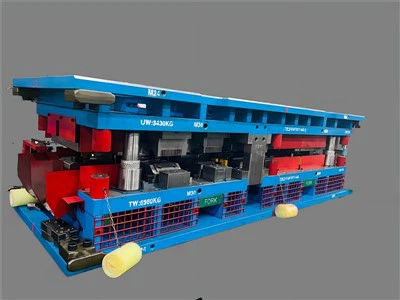
First off, let's talk about how these two types of parts are made. Stamped auto bracket parts are produced through a process called stamping. It's like using a big, high - tech cookie cutter. A sheet of metal is placed in a stamping press, and a die (a special tool) is used to cut, bend, or shape the metal into the desired bracket shape. There are different types of dies used in stamping, like the Casting Progressive Die, Transfer Die, and Progressive casting die. These dies can be customized to create complex shapes with high precision.
On the other hand, forged auto bracket parts are made through forging. This process involves heating a piece of metal until it's malleable and then using a hammer or a press to shape it. Forging can be done in different ways, like open - die forging or closed - die forging. In open - die forging, the metal is shaped between two flat or simple - shaped dies, while in closed - die forging, the metal is placed in a die cavity that has the exact shape of the final part.
Material Properties
The materials used for stamped and forged parts can vary, and so do their properties. Stamped parts are usually made from sheet metals like steel, aluminum, or stainless steel. These materials are relatively thin and lightweight, which makes them a great choice for applications where weight is a concern. For example, in modern cars, reducing weight can improve fuel efficiency. Sheet metals also have good formability, which means they can be easily shaped into different designs during the stamping process.
Forged parts, however, are typically made from solid blocks of metal. The forging process compresses the metal grains, making the part stronger and more durable. Forged parts can withstand higher stress and impact loads compared to stamped parts. They are often used in critical applications where reliability is key, such as in the suspension systems of vehicles.
Cost Considerations
Cost is always a big factor in the automotive industry. Stamped parts are generally more cost - effective to produce, especially for high - volume production. The stamping process is relatively fast, and the dies used in stamping can be used to produce a large number of parts. Once the die is made, the cost per part is relatively low. Also, the raw materials for stamped parts (sheet metals) are usually less expensive than the solid blocks of metal used for forging.
Forged parts, on the other hand, are more expensive to produce. The forging process requires more energy and time, and the equipment used for forging is more expensive. The raw materials for forging are also more costly. However, in some cases, the higher cost of forged parts is justified by their superior strength and durability.
Design Flexibility
When it comes to design flexibility, stamped parts have an edge. The stamping process allows for the creation of complex shapes with tight tolerances. The dies can be designed to produce parts with different features, such as holes, flanges, and bends. This makes stamped parts suitable for a wide range of applications in the automotive industry.
Forged parts, while they can also be made into various shapes, have some limitations in terms of design complexity. The forging process may not be able to produce parts with very thin walls or intricate details. However, for simple and robust designs, forging can provide excellent results.
Surface Finish
The surface finish of stamped and forged parts also differs. Stamped parts usually have a smooth surface finish, which is suitable for most automotive applications. The stamping process can produce parts with a consistent surface quality, and additional finishing operations like painting or plating can be easily applied.
Forged parts may have a rougher surface finish due to the nature of the forging process. After forging, additional machining operations may be required to achieve the desired surface finish. This can add to the production cost and time of forged parts.


Quality and Reliability
In terms of quality and reliability, both stamped and forged parts have their own advantages. Stamped parts can be produced with high precision and consistency, which ensures good quality. However, they may be more prone to cracking or deformation under high stress conditions.
Forged parts, as mentioned earlier, are stronger and more durable. They can withstand harsh operating conditions and are less likely to fail under stress. This makes them a preferred choice for critical applications in the automotive industry.
Applications in the Automotive Industry
Stamped auto bracket parts are widely used in the automotive industry. They can be found in the body structure of vehicles, such as in the door frames, roof rails, and floor pans. Stamped parts are also used in the interior of vehicles, like in the dashboard brackets and seat frames.
Forged auto bracket parts are commonly used in the powertrain and suspension systems of vehicles. For example, forged brackets are used to support the engine, transmission, and axles. They are also used in the steering and braking systems, where reliability and strength are crucial.
Conclusion
In conclusion, stamped and forged auto bracket parts have their own unique characteristics, advantages, and disadvantages. Stamped parts are cost - effective, lightweight, and offer high design flexibility, making them suitable for a wide range of applications. Forged parts, on the other hand, are stronger, more durable, and are ideal for critical applications where reliability is essential.
As an auto bracket parts supplier, I understand the importance of choosing the right type of part for each application. Whether you need stamped or forged auto bracket parts, I can provide you with high - quality products that meet your specific requirements. If you're interested in purchasing auto bracket parts or have any questions, feel free to reach out to me for a detailed discussion. Let's work together to find the best solutions for your automotive needs.
References
- "Automotive Stamping Technology" by John Doe
- "Forging in the Automotive Industry" by Jane Smith
- Various industry reports and technical papers on automotive manufacturing processes.