Hey there! As a supplier of auto bracket parts, I've been deeply involved in the manufacturing game for quite some time. Today, I'm gonna share with you the common manufacturing processes for these crucial auto parts.
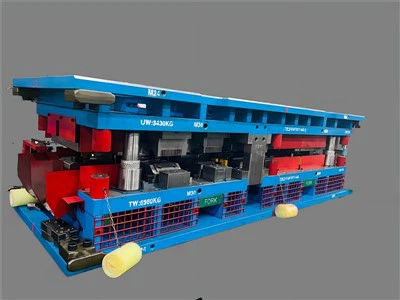
Let's kick things off with stamping. Stamping is like the bread - and - butter of auto bracket part manufacturing. It's a process where we use a press and a die to transform a flat sheet of metal into the desired shape. There are a couple of different types of dies used in stamping, and they play a big role in how efficient and precise the process is.
First up, we have the single casting die. This type of die is used for simple, one - step stamping operations. It's great for producing small - scale batches of auto bracket parts. With a single casting die, we can punch out a single shape from the metal sheet in one go. It's relatively easy to set up and maintain, which makes it a cost - effective option for some of our customers who need smaller quantities of brackets.
Then, there's the Custom Stamping Dies. These are designed to meet the specific requirements of our clients. Every auto bracket part can have unique features, like special holes, bends, or contours. Custom stamping dies allow us to create parts that fit exactly what the customer needs. We work closely with our clients to understand their design specifications, and then our team of experts gets to work on crafting these custom dies. It might take a bit more time and effort upfront, but the end result is a high - quality, perfectly - tailored auto bracket part.
Another popular option is the Progressive casting die. This is a more advanced stamping method. In a progressive die setup, the metal sheet moves through a series of stations, with each station performing a different operation on the part. For example, one station might punch a hole, another might bend the metal, and yet another might trim the edges. This continuous process is highly efficient and can produce a large number of parts in a relatively short time. It's ideal for high - volume production runs, where we need to churn out thousands of auto bracket parts quickly.
Next on our list is casting. Casting is a process where we pour molten metal into a mold and let it solidify into the desired shape. There are different types of casting methods used in auto bracket part manufacturing.
Sand casting is one of the oldest and most widely used casting techniques. We create a mold out of sand, which is relatively inexpensive and easy to work with. The sand mold is made in two halves, and the molten metal is poured into the cavity between them. Once the metal cools and solidifies, we break the sand mold to remove the part. Sand casting is great for producing large, complex - shaped auto bracket parts. However, the surface finish might not be as smooth as some other methods, so additional finishing operations might be required.
Die casting is another option. In die casting, we use a metal mold, also known as a die. The molten metal is injected into the die under high pressure. This results in a part with a very precise shape and a smooth surface finish. Die casting is suitable for producing parts with thin walls and complex geometries. It's also a fast process, which makes it a good choice for high - volume production. However, the initial cost of creating the die can be quite high, so it's more cost - effective for large production runs.
Forging is yet another important manufacturing process for auto bracket parts. Forging involves shaping the metal by applying compressive forces. We heat the metal to a high temperature until it becomes malleable, and then we use a hammer or a press to shape it. Forged auto bracket parts are known for their high strength and durability. The forging process aligns the grain structure of the metal, which gives the part better mechanical properties. This makes forged brackets ideal for applications where the part will be subjected to high stress, such as in heavy - duty vehicles.
Machining is also commonly used in the production of auto bracket parts. Machining involves removing material from a workpiece to create the desired shape. We use various machining operations, such as turning, milling, and drilling. Turning is used to create cylindrical shapes, while milling is used to create flat surfaces and complex geometries. Drilling is used to create holes in the parts. Machining allows us to achieve very high levels of precision and accuracy. It's often used for finishing operations or for creating parts with tight tolerances.
After the manufacturing process is complete, we also perform a series of quality control checks. We measure the dimensions of the parts to ensure they meet the design specifications. We also check for any surface defects, such as cracks or porosity. We use advanced inspection equipment, like coordinate measuring machines (CMMs), to ensure the highest level of quality.
As a supplier of auto bracket parts, we're committed to providing our customers with the best - quality products at competitive prices. Whether you need a small batch of custom - designed brackets or a large - scale production run, we have the expertise and the manufacturing capabilities to meet your needs.
If you're in the market for auto bracket parts, don't hesitate to reach out to us. We'd love to have a chat with you about your requirements and see how we can help you get the perfect parts for your vehicles. Let's work together to make your auto projects a success!
References


- "Manufacturing Processes for Engineering Materials" by S. Kalpakjian and S. R. Schmid
- "Automotive Manufacturing Technology" by various industry experts