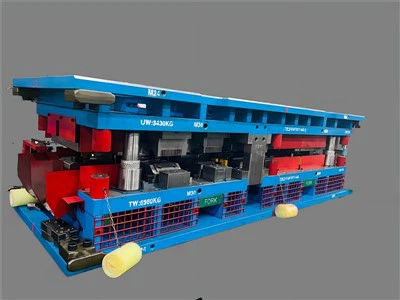
Hey there! I'm a supplier of washer stamping dies, and today I wanna share some tips on how to design the die shape for better washer stamping results. Stamping washers might seem like a simple process, but the die shape plays a crucial role in determining the quality, efficiency, and cost - effectiveness of the whole operation.
Understanding the Basics of Washer Stamping
Before we dive into die - shape design, let's quickly go over what washer stamping is. It's a manufacturing process where a flat sheet of metal is placed in a stamping die. The die then uses force to cut, shape, and form the metal into the desired washer shape. The quality of the washer depends on how well the die is designed.
Factors Affecting Die Shape Design
Material Characteristics
The type of metal used for the washers has a big impact on die - shape design. Different metals have different properties like hardness, ductility, and elasticity. For example, stainless steel is harder than aluminum. A die designed for stamping stainless - steel washers needs to be more robust and have sharper cutting edges compared to a die for aluminum washers. If the die isn't designed according to the material's characteristics, it can lead to issues like burrs on the washers, uneven cuts, or even premature die wear.
Washer Dimensions
The size and thickness of the washers are also key factors. Smaller washers may require more precise die shapes to ensure accurate cuts. For very thin washers, the die needs to be designed to prevent excessive deformation during stamping. On the other hand, larger and thicker washers might need a die with a stronger and more rigid structure to handle the increased force required for stamping.
Production Volume
If you're producing a large number of washers, the die shape needs to be optimized for high - volume production. This could mean designing the die to allow for faster stamping cycles. For example, a die with a multi - cavity design can stamp multiple washers at once, increasing the production rate. However, this also requires more careful design to ensure that all the cavities produce consistent results.
Designing the Die Shape for Better Results
Cutting Edge Design
The cutting edges of the die are where the actual stamping action happens. For a clean and precise cut, the cutting edges should be sharp. A sharp cutting edge reduces the force required for stamping and minimizes the formation of burrs on the washers. The angle of the cutting edge also matters. A proper angle can help in smooth material flow during stamping, preventing tearing or distortion of the metal.
Clearance Design
Clearance refers to the space between the punch and the die. It's a critical aspect of die - shape design. If the clearance is too small, the punch may get stuck in the die, causing damage to both the die and the stamping equipment. If the clearance is too large, it can result in rough edges and inaccurate washer dimensions. The ideal clearance depends on the material thickness and type. Generally, for thinner materials, a smaller clearance is required.


Contour Design
The contour of the die, which determines the outer shape of the washer, should be designed according to the final application of the washer. For example, if the washer is going to be used in a high - precision mechanical assembly, the die contour needs to be extremely accurate. Some advanced die - contour designs can also help in reducing stress concentrations during stamping, which in turn can improve the overall strength and durability of the washers.
Types of Dies and Their Shapes
Single - Action Dies
Single - action dies are the simplest type of stamping dies. They are used for basic stamping operations like blanking a single washer from a metal sheet. The shape of a single - action die is relatively straightforward, with a simple cutting edge design. These dies are suitable for small - scale production or for washers with simple shapes.
Progressive Dies
Progressive dies are more complex and are used for high - volume production. They have multiple stations, each performing a different stamping operation on the metal strip as it moves through the die. The shape of a progressive die is designed to ensure smooth and continuous material flow between the stations. You can check out Progressive Die Tooling for more details on this type of die.
Tandem Dies
Tandem dies are similar to progressive dies but are used when even higher production rates are required. They consist of multiple progressive dies arranged in a series. The shape design of tandem dies needs to be highly optimized to ensure that the metal strip moves smoothly through all the dies. You can find more information about Tandem Die.
Quality Control in Die Shape Design
Once the die is designed, quality control is essential. This involves checking the die shape using precision measurement tools like calipers, micrometers, and coordinate measuring machines (CMMs). Any deviations from the design specifications need to be corrected before the die is put into production. Regular maintenance of the die is also important to keep its shape accurate over time.
Cost - Benefit Analysis of Die Shape Design
Designing the perfect die shape often comes at a cost. More complex die shapes may require advanced manufacturing techniques and higher - quality materials, which can increase the initial investment. However, a well - designed die can lead to significant savings in the long run. It can reduce the number of defective washers, increase production efficiency, and extend the die's lifespan. So, it's important to do a cost - benefit analysis when designing the die shape.
Conclusion
Designing the die shape for better washer stamping results is a complex but rewarding process. By considering factors like material characteristics, washer dimensions, and production volume, and by focusing on aspects like cutting edge design, clearance, and contour, you can create a die that produces high - quality washers efficiently. Whether you're using single - action, progressive, or tandem dies, the key is to optimize the shape for the specific requirements of your stamping operation.
If you're in the market for washer stamping dies or have any questions about die - shape design, feel free to reach out. We're here to help you get the best results for your washer stamping needs.
References
- "Metal Stamping Handbook" by Peter Ulintz
- "Die Design Handbook" by Society of Manufacturing Engineers