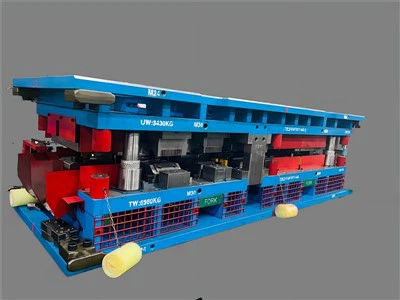
Deep draw parts play a crucial role in the consumer goods industry, offering a wide range of applications due to their unique manufacturing process and resulting properties. As a supplier of deep draw parts, I have witnessed firsthand how these components are integrated into various consumer products, enhancing their functionality, durability, and aesthetic appeal.
The Basics of Deep Draw Parts
Deep drawing is a metal forming process that involves converting a flat sheet metal blank into a three - dimensional shape by using a punch and a die. The punch forces the metal into the die cavity, causing the metal to flow and stretch. This process can create parts with a depth greater than their diameter, which is a significant advantage in many consumer goods applications.
The materials used for deep draw parts can vary widely, including stainless steel, aluminum, copper, and brass. Each material offers different properties such as corrosion resistance, strength, and conductivity, allowing for customization based on the specific requirements of the consumer product.
Applications in the Consumer Goods Industry
Electronics
In the electronics industry, deep draw parts are used in a variety of products. For example, mobile phone cases often utilize deep draw parts made from aluminum or stainless steel. These materials provide a lightweight yet durable housing for the delicate internal components of the phone. The deep drawing process allows for precise shaping, enabling the integration of features such as buttons, ports, and antenna slots.
Tablet computers also benefit from deep draw parts. The chassis of a tablet needs to be rigid enough to protect the screen and internal electronics while being thin and lightweight. Deep draw parts made from high - strength alloys can meet these requirements, providing a sleek and functional design.
Home Appliances
Home appliances are another major area where deep draw parts are extensively used. Refrigerators, for instance, rely on deep draw parts for components such as the inner liners and door panels. Stainless steel deep draw parts offer excellent corrosion resistance and a smooth surface finish, which is not only hygienic but also aesthetically pleasing.
Washing machines use deep draw parts for the tubs and drums. These parts need to withstand the constant agitation and water exposure. The deep drawing process can create seamless tubs, reducing the risk of leaks and improving the overall reliability of the appliance.
Kitchenware
In the kitchenware industry, deep draw parts are ubiquitous. Pots and pans are often made using the deep drawing process. Aluminum is a popular choice for its excellent heat conductivity and lightweight nature. The deep drawing process allows for the creation of uniform - walled cookware, ensuring even heat distribution during cooking.
Cutlery sets may also incorporate deep draw parts. Handles made from deep draw parts can be ergonomically designed, providing a comfortable grip for the user. Additionally, the process can create decorative elements on the handles, enhancing the overall aesthetic of the cutlery.
Advantages of Using Deep Draw Parts in Consumer Goods
Cost - Effectiveness
Deep drawing is a highly efficient manufacturing process, especially for large - volume production. Once the dies are created, the production of deep draw parts can be automated, reducing labor costs. The use of sheet metal as a raw material is also relatively inexpensive compared to other manufacturing methods, making deep draw parts a cost - effective solution for consumer goods manufacturers.
Design Flexibility
The deep drawing process offers a high degree of design flexibility. Complex shapes and geometries can be achieved with relative ease, allowing manufacturers to create unique and innovative consumer products. This flexibility also enables the integration of multiple functions into a single part, reducing the need for assembly of multiple components.
Strength and Durability
Deep draw parts typically have a high strength - to - weight ratio. The metal is work - hardened during the deep drawing process, which increases its strength. This makes deep draw parts suitable for applications where durability is essential, such as in automotive components and heavy - duty home appliances.
Our Offerings as a Deep Draw Parts Supplier
As a supplier of deep draw parts, we are committed to providing high - quality products that meet the diverse needs of the consumer goods industry. We have a state - of - the - art manufacturing facility equipped with advanced deep drawing machines and precision tooling.


Our team of experienced engineers can work closely with customers to develop custom deep draw parts. Whether it's a unique shape for a new electronic device or a specialized component for a home appliance, we have the expertise to turn your design concepts into reality.
We offer a wide range of materials for deep draw parts, including different grades of stainless steel, aluminum, and copper. Our quality control processes ensure that each part meets strict standards for dimensional accuracy, surface finish, and mechanical properties.
In addition to deep draw parts, we also provide related services such as tooling design and manufacturing. We can create Automotive Metal Stamping Die, single casting die, and Transfer Die to meet the specific requirements of our customers' production processes.
Contact Us for Procurement
If you are a consumer goods manufacturer looking for high - quality deep draw parts, we invite you to contact us for procurement. Our team of experts is ready to discuss your project requirements, provide samples, and offer competitive pricing. We understand the importance of timely delivery and reliable service in the consumer goods industry, and we are committed to meeting your expectations.
References
- ASM Handbook, Volume 14A: Metalworking: Bulk Forming. ASM International.
- Kalpakjian, S., & Schmid, S. R. (2008). Manufacturing Engineering and Technology. Pearson Prentice Hall.
- Dieter, G. E. (1986). Mechanical Metallurgy. McGraw - Hill.