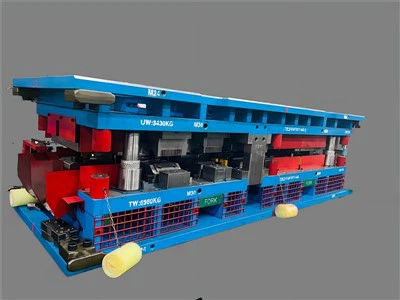
Yo, folks! As a supplier of washing machine dies, I've been getting a bunch of questions lately about whether washing machines kick the bucket more often in areas with hard water. So, I thought I'd dive into this topic and share what I've learned.
First off, let's talk about what hard water actually is. Hard water contains high levels of minerals, mainly calcium and magnesium. These minerals dissolve in water as it passes through rocks and soil. You can usually tell if you have hard water if you notice white, chalky deposits on your faucets, showerheads, or in your sinks. It can also make your soap less effective and leave your clothes feeling stiff and looking dull.
Now, the big question: does hard water really cause washing machines to die more frequently? Well, the short answer is yes, it can. Here's how.
One of the main problems with hard water is that those minerals can build up inside your washing machine over time. This is called limescale or scale buildup. Limescale can form on the heating elements, pipes, and other components of the washing machine. When limescale builds up on the heating elements, it acts as an insulator. This means that the heating elements have to work harder to heat the water, which can lead to overheating and eventually, burnout. Overheating can cause the heating elements to break down, and replacing them can be expensive.
In addition to the heating elements, limescale can also clog the pipes and hoses in your washing machine. This can restrict the flow of water, making it harder for the machine to fill and drain properly. If the water can't flow freely, it can put extra stress on the pump and other mechanical parts of the machine. Over time, this extra stress can cause these parts to wear out faster and fail.
Another issue with hard water is that it can react with detergents. When hard water mixes with detergent, it forms a scum or residue. This scum can build up on the drum of the washing machine, as well as on your clothes. The buildup on the drum can make it harder for the machine to clean your clothes effectively, and it can also cause the drum to become unbalanced. An unbalanced drum can lead to excessive vibration and noise during the spin cycle, which can damage the machine's bearings and other components.
So, what can you do if you live in an area with hard water? Well, there are a few things you can try. One option is to use a water softener. A water softener removes the calcium and magnesium ions from the water, replacing them with sodium ions. This makes the water "soft," which can help prevent limescale buildup and reduce the problems associated with hard water. However, water softeners can be expensive to install and maintain, so this might not be a practical option for everyone.
Another option is to use a descaling agent. Descaling agents are chemicals that are designed to dissolve limescale. You can use a descaling agent to clean your washing machine periodically, which can help remove any limescale that has built up. Just follow the instructions on the descaling agent carefully, and make sure to run a few rinse cycles after using it to remove any remaining chemicals.
You can also try using a detergent that is specifically designed for hard water. These detergents are formulated to work better in hard water conditions, and they can help reduce the formation of scum and residue.
As a washing machine die supplier, I've seen firsthand the impact that hard water can have on washing machines. That's why I'm always looking for ways to improve the durability and performance of our dies. We use high-quality materials and advanced manufacturing techniques to ensure that our dies can withstand the harsh conditions that washing machines face, including the effects of hard water.
If you're in the market for a Gas Stove Die, Microwave Oven Die, or Tandem Die, we've got you covered. Our dies are designed to produce high-quality parts that are built to last. Whether you're a large appliance manufacturer or a small repair shop, we can provide you with the dies you need at a competitive price.
If you're interested in learning more about our products or have any questions about how hard water can affect washing machines, don't hesitate to reach out. We're always happy to chat and help you find the right solutions for your needs.
In conclusion, hard water can definitely take a toll on your washing machine. The minerals in hard water can cause limescale buildup, clog pipes, react with detergents, and put extra stress on the machine's components. However, by taking some preventive measures, such as using a water softener, descaling agent, or hard-water detergent, you can help extend the life of your washing machine. And if you're in the market for a new washing machine die or other home appliance dies, we're here to help. Contact us today to start the conversation and see how we can work together to meet your needs.


References
- "The Effects of Hard Water on Appliances." Home Water Works.
- "How Hard Water Affects Your Washing Machine." Appliance Repair Blog.
- "Preventing Limescale Build-Up in Your Washing Machine." Which?