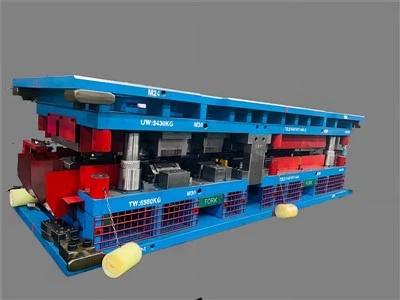
Can using the wrong voltage make a home appliance die? You bet it can! As a home appliance die supplier, I've seen firsthand the aftermath of voltage mishaps on all sorts of home appliances. In this blog, I'll break down how incorrect voltage can spell disaster for your beloved kitchen gadgets and more, and I'll also tell you a bit about the dies we supply that are used in making these appliances.
First off, let's talk about what voltage is. In simple terms, voltage is like the pressure that pushes electric current through a circuit in your home appliance. Every appliance is designed to work within a specific voltage range. When you plug it into an outlet, it expects to get a certain amount of this "pressure" to function properly.
So, what happens when you use the wrong voltage? Well, there are two main scenarios: over - voltage and under - voltage.
Over - voltage
Over - voltage occurs when the voltage supplied to the appliance is higher than what it's designed for. This is like forcing too much water through a narrow pipe. The extra electrical pressure can cause a whole bunch of problems.
One of the most immediate effects is overheating. The components inside the appliance, like the wiring, resistors, and capacitors, are not built to handle the extra current that comes with the high voltage. As a result, they heat up quickly. If this overheating persists, it can damage the insulation on the wires, leading to short circuits. A short circuit is when the electrical current takes an unintended path, often causing a sudden surge of current that can fry the appliance's internal components.
For example, a Gas Stove Die is used to make parts for gas stoves. If the control panel of a gas stove is exposed to over - voltage, the electronic components that regulate the flame, temperature, and other functions can get damaged. The display might go out, or the controls might stop working altogether.


Another issue with over - voltage is that it can cause premature wear and tear on the components. The high voltage can break down the chemical structure of the materials inside the appliance over time. This means that even if the appliance doesn't fail immediately, its lifespan will be significantly reduced.
Under - voltage
On the flip side, under - voltage is when the voltage supplied is lower than the appliance's rated voltage. This is like not having enough water pressure to get the water flowing properly through the pipe.
When an appliance doesn't get enough voltage, it may not be able to function at all. For instance, a microwave oven made with a Microwave Oven Die might not heat food effectively. The magnetron, which is the component that generates the microwaves, needs a specific amount of voltage to operate correctly. If the voltage is too low, the magnetron won't produce enough microwaves, and your food will come out cold or only partially heated.
Under - voltage can also cause the appliance to draw more current in an attempt to compensate for the lack of voltage. This increased current can lead to overheating, just like in the case of over - voltage. The motor in a refrigerator or a washing machine, for example, may start to overheat if it doesn't get enough voltage. This can damage the motor windings and other mechanical parts, eventually leading to the appliance's failure.
How to prevent voltage problems
Now that we know how dangerous the wrong voltage can be, how can we prevent it?
First, always check the voltage requirements of your appliances before plugging them in. Most appliances have a label on the back or bottom that shows the recommended voltage range. Make sure your home's electrical system can provide the right voltage.
If you're traveling abroad, be especially careful. Different countries have different standard voltages. You may need to use a voltage converter to ensure your appliances get the correct voltage.
Installing a voltage stabilizer can also be a great idea. A voltage stabilizer regulates the voltage supplied to your appliances, keeping it within the safe range. This can protect your appliances from both over - voltage and under - voltage situations.
Our role as a home appliance die supplier
As a home appliance die supplier, we play a crucial role in the manufacturing of reliable home appliances. Our Progressive Die Tooling is used to create precise and high - quality parts for a wide range of home appliances. These parts are designed to fit together perfectly and work efficiently within the specified voltage range.
We understand the importance of quality in preventing appliance failures. That's why we use the latest technology and the highest - grade materials to make our dies. Our dies are used to stamp out parts like panels, brackets, and other components that are essential for the proper functioning of home appliances.
By ensuring that the parts are made with precision, we help manufacturers produce appliances that are more resistant to voltage - related problems. A well - made part is less likely to overheat or malfunction when exposed to minor voltage fluctuations.
Conclusion
In conclusion, using the wrong voltage can definitely make a home appliance die. Over - voltage and under - voltage can cause a variety of problems, from overheating and short circuits to premature wear and tear. However, by being aware of the voltage requirements of your appliances and taking preventive measures, you can protect your investments.
If you're a home appliance manufacturer looking for high - quality dies, we're here to help. Our dies are designed to meet the strictest standards and can help you produce reliable appliances. Don't hesitate to contact us for more information and to start a procurement discussion. We're eager to work with you to create the best home appliances on the market.
References
- Electrical Safety Foundation International. (2023). Understanding Voltage and Electrical Safety in the Home.
- IEEE Transactions on Power Electronics. (2022). Impact of Voltage Fluctuations on Home Appliance Reliability.