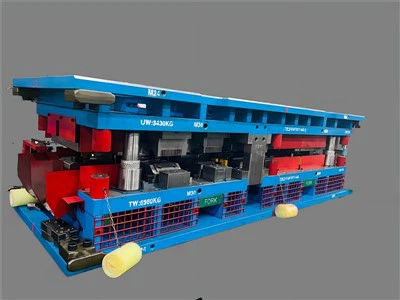
Simulation technology has emerged as a game - changer in the field of tandem die design. As a tandem die supplier, I have witnessed firsthand how this technology has revolutionized the way we approach die design, offering numerous benefits and opportunities for optimization.
Understanding Tandem Die Design
Tandem dies are a type of progressive die used in metal stamping operations. They consist of multiple die stations arranged in a linear sequence, where the workpiece is progressively formed and cut as it moves through each station. Tandem dies are commonly used in high - volume production of complex metal parts, such as those found in home appliances. For more information on tandem dies, you can visit Tandem Die.
The design of tandem dies is a complex process that requires careful consideration of various factors, including the part geometry, material properties, production volume, and stamping equipment capabilities. Traditionally, die design was based on experience and trial - and - error methods, which were time - consuming, costly, and often led to sub - optimal designs.
The Role of Simulation Technology in Tandem Die Design
Pre - Design Analysis
Simulation technology allows us to conduct detailed pre - design analysis of the stamping process. By creating a virtual model of the die and the workpiece, we can simulate the entire stamping operation and predict how the material will behave under different conditions. This includes analyzing factors such as material flow, stress distribution, and springback.
For example, in the design of a Microwave Oven Die, simulation can help us determine the optimal die geometry to ensure proper material flow and minimize the risk of defects such as wrinkles and cracks. We can also use simulation to evaluate different stamping parameters, such as punch speed and pressure, to find the most efficient and cost - effective combination.
Die Optimization
Once the initial design is created, simulation technology enables us to optimize the die design further. We can make changes to the die geometry, material selection, or stamping process parameters in the virtual environment and immediately see the impact on the stamping results. This iterative process allows us to fine - tune the design until we achieve the desired performance.
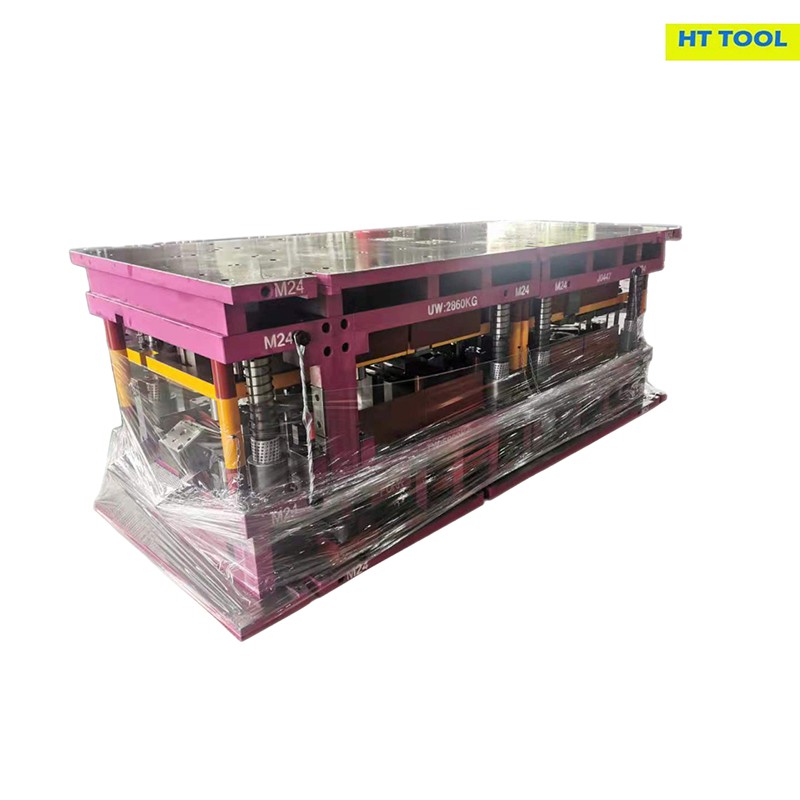

For instance, if the simulation shows that there is excessive stress in a particular area of the die, we can modify the die shape to redistribute the stress and improve the die's durability. This not only reduces the risk of die failure but also extends the die's service life, resulting in lower production costs in the long run.
Cost Reduction
One of the most significant advantages of using simulation technology in tandem die design is cost reduction. By identifying and resolving potential problems in the virtual environment, we can avoid costly mistakes during the physical die manufacturing process. This includes reducing the number of die prototypes and the amount of material waste.
For example, without simulation, we might have to build multiple die prototypes to test different design concepts. Each prototype requires time and resources to manufacture, and if a design flaw is discovered late in the process, it can be very expensive to correct. With simulation, we can eliminate many of these trial - and - error steps and go directly to the final design, saving both time and money.
Quality Improvement
Simulation technology also plays a crucial role in improving the quality of the stamped parts. By accurately predicting the material behavior and the stamping process outcomes, we can design dies that produce parts with consistent dimensions and high - quality surface finishes.
In the context of Progressive Die Metal Stamping, which is often used in the production of home appliance parts, quality is of utmost importance. Simulation allows us to ensure that the parts meet the strict quality standards required by the industry, reducing the number of rejected parts and improving customer satisfaction.
Process Planning
Simulation technology helps in the development of efficient process plans for tandem die stamping. We can simulate the entire production line, including the feeding system, the stamping press, and the ejection mechanism, to optimize the workflow and increase productivity.
For example, we can determine the optimal feeding speed and the number of parts that can be produced per minute based on the simulation results. This information is essential for scheduling production and ensuring that the manufacturing process runs smoothly.
Challenges and Limitations of Simulation Technology in Tandem Die Design
While simulation technology offers many benefits, it also has some challenges and limitations. One of the main challenges is the accuracy of the simulation models. The accuracy of the simulation depends on the quality of the input data, such as the material properties and the friction coefficients. If these data are not accurately measured or estimated, the simulation results may not accurately reflect the real - world stamping process.
Another limitation is the computational time required for complex simulations. Some simulations, especially those involving large - scale models or detailed material behavior, can take a long time to run. This can slow down the design process, especially when multiple design iterations are required.
Future Trends in Simulation Technology for Tandem Die Design
Despite the challenges, the future of simulation technology in tandem die design looks promising. Advances in computer hardware and software are making simulations faster and more accurate. For example, the use of high - performance computing clusters and parallel processing techniques can significantly reduce the computational time required for complex simulations.
In addition, the integration of artificial intelligence (AI) and machine learning (ML) algorithms into simulation software is expected to enhance the capabilities of simulation technology. AI and ML can be used to analyze large amounts of simulation data, identify patterns, and make predictions, enabling more intelligent and automated die design processes.
Conclusion
In conclusion, simulation technology has become an indispensable tool in tandem die design. As a tandem die supplier, I highly recommend the use of simulation technology in the die design process. It offers numerous benefits, including pre - design analysis, die optimization, cost reduction, quality improvement, and process planning.
If you are in the market for high - quality tandem dies or have any questions about tandem die design and simulation technology, I encourage you to reach out to us. We are committed to providing our customers with the best - in - class die solutions and leveraging the latest simulation technology to ensure the success of your stamping projects. Contact us today to start a conversation about your specific needs and how we can help you achieve your production goals.
References
- Johnson, R. W., & Mellor, P. H. (1983). Metal forming: principles and practice. Van Nostrand Reinhold.
- Dieter, G. E. (1986). Mechanical metallurgy. McGraw - Hill.
- Altan, T., Oh, S. I., & Gegel, H. L. (1983). Metal forming fundamentals and applications. American Society for Metals.